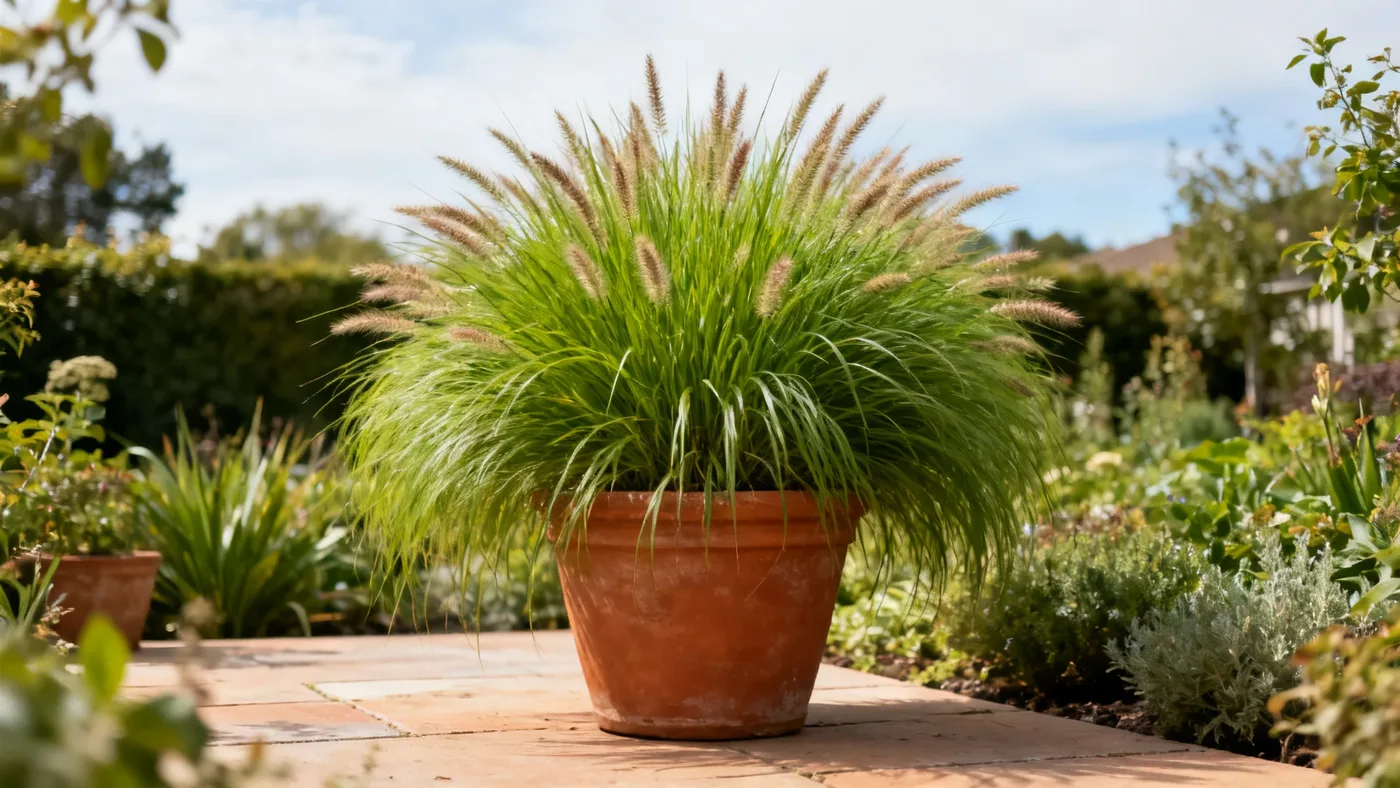
Dwarf Fountain Grass Buying Guide: What Size Pot to Choose
Buying Dwarf Fountain Grass feels simple until you stand in a nursery facing quart, gallon, and 3-gallon containers all labeled with the same name. Container size matters more than most gardeners realize. A smaller plant at the right price point can outperform a larger one if you know what to look for. This guide walks you through every decision you'll make when shopping for Dwarf Fountain Grass, from spotting a healthy plant to choosing the container size that fits your needs and timeline.
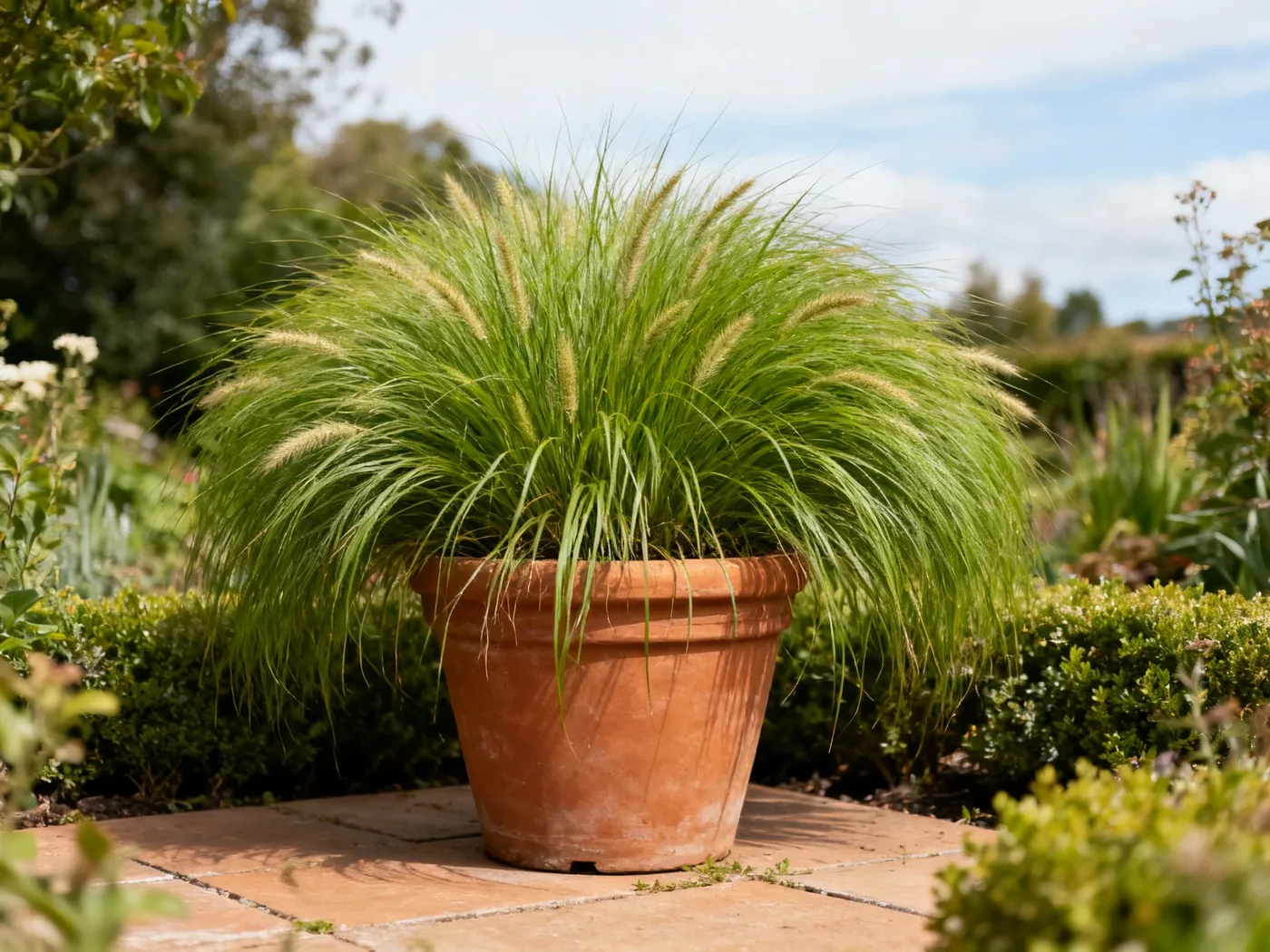
Understanding Nursery Container Sizes for Dwarf Fountain Grass
When you buy Dwarf Fountain Grass for sale at a nursery, you'll typically encounter three standard sizes: quart containers, #1 containers (also called 1-gallon), and #3 containers (also called 3-gallon). Understanding what you get with each size helps you make the best choice for your garden.
Quart containers hold a younger plant, usually smaller and less established than larger options. These plants may be 6 to 10 inches tall at purchase and still feature relatively compact foliage. Quart-sized Dwarf Fountain Grass typically costs less than larger sizes, making it a budget-friendly entry point. The tradeoff is that the plant takes longer to reach its mature clump size of 18 to 24 inches.
#1 containers (1 gallon) offer a middle ground. Plants at this size are more developed than quarts but less mature than #3 options. A #1 Dwarf Fountain Grass usually stands 12 to 18 inches tall and has a more established root system. This size is popular for good reason: the plant is mature enough to make an impact in your garden right away, yet affordable enough for most budgets.
#3 containers (3 gallon) hold the largest plants, typically 18 to 24 inches tall at purchase, sometimes taller once flower plumes emerge in mid to late summer. These plants offer instant visual impact and are ideal if you need fast results or prefer not to wait for growth. A #3 Dwarf Fountain Grass is closer to its mature size but carries a higher price tag to match.
All three sizes will reach the same mature height (18 to 24 inches in the clump, 24 to 30 inches with plumes) within 2 to 3 years of planting, growing roughly 6 to 12 inches per year while establishing. The size you buy determines how quickly you see results, not the plant's final form.
What to Look For in a Healthy Dwarf Fountain Grass Plant
Before you decide on size, know how to spot a plant worth buying. A healthy Dwarf Fountain Grass looks crisp and vibrant, with no signs of stress or neglect.
Foliage quality is your first clue. The fine-textured blades should be mid-green in color and arching naturally in a fountain shape. Avoid plants with yellowing, browning, or bleached foliage, which signal stress, poor drainage, or pest damage. The foliage should not feel papery or brittle when you gently brush it. If the plant looks dull, limp, or sparse, keep looking.
Drainage holes in the pot are essential. Check the bottom of the container. If drainage holes are missing or severely clogged, the plant may have suffered from waterlogging. Peer into the drainage holes if you can; the soil inside should appear moist but not soggy or slimy.
Gently touch the soil surface. It should feel slightly moist, not bone dry or waterlogged. A bone-dry pot suggests the plant has been neglected; overly wet soil may indicate root rot risk. If the soil pulls away from the edges of the pot, the plant has been underwatered for an extended period.
Check the crown area. Where the foliage meets the soil, look for any soft, mushy, or blackened tissue. A healthy crown is firm and free of obvious decay. This area is critical because fountain grass crown rot can occur if drainage fails after planting.
Inspect for pests and disease. Turn a leaf over and scan both sides for mealybugs, spider mites, or other insects. Look for unusual spots, streaks, or fuzzy growth on the foliage. Fountain grass is generally pest-free, but occasional fountain grass mealybug (region-dependent) can occur. Visible pests or disease warrant passing on that plant.
Check the label. It should clearly state the cultivar name 'Hameln,' not just the species. The label should also confirm USDA hardiness zone compatibility (Dwarf Fountain Grass thrives in zones 5 through 9) and sun requirements (full sun performs best, though it tolerates light shade with fewer blooms).
Container Size vs. Your Growing Timeline
Your choice between quart, #1, and #3 depends partly on how patient you are. If you plant a quart-sized Dwarf Fountain Grass in spring after your last frost, you'll have a 6-to-10-inch plant filling a space designed for an 18-to-24-inch mature specimen. By the following season, that quart plant will have grown 6 to 12 inches and begun filling the space. After two full seasons, it reaches mature size.
A #1 container plant planted at the same time starts larger and fills the garden space faster, often looking established by late summer of year one. The #3 container gives you nearly full-sized plants on day one, ideal for high-visibility spots or when you need immediate landscape impact.
If you're mass planting a border with multiple Dwarf Fountain Grass plants spaced 18 to 24 inches apart, quart or #1 containers often make better economic sense than buying dozens of #3 pots. If you're highlighting a single specimen in a prominent location, a #3 plant or two #1 plants grouped together create faster impact.
Best Dwarf Fountain Grass Options for Different Scenarios
For containers or small spaces: Choose quart or #1 sizes. Dwarf Fountain Grass performs well in containers with well-drained potting mix. Quart plants fit naturally into pot-in-pot arrangements. In colder zones (5-7), plan to overwinter containers indoors, in an unheated garage, or provide frost protection.
For large perennial beds or borders: #1 containers offer the best balance of cost and immediate presence. Plant them 18 to 24 inches apart and enjoy lush coverage by the second season.
For erosion control on slopes: The moderate growth rate and established root system of #1 or #3 plants perform better than quarts on challenging sites where you need quick stabilization.
For fast-growing accents: A #3 Dwarf Fountain Grass blooms the first year (typically mid to late summer into fall, roughly July through September depending on your region) and makes a full visual statement within weeks of planting.
For budget-conscious gardeners: Quart plants cost considerably less and reach maturity in 2 to 3 seasons. The wait is minimal compared to the savings, especially when buying multiple plants.
Where to Buy Best Dwarf Fountain Grass Plants
Dwarf Fountain Grass for sale appears at local nurseries, garden centers, mail-order operations, and online retailers. Each option has tradeoffs.
Local nurseries and garden centers let you inspect plants in person before buying. You can verify foliage color, check for pests, and see exactly what you're purchasing. Staff can advise on planting depth, watering needs, and companion plantings. Ask whether they carry quart, #1, and #3 sizes or if you need to special-order specific sizes.
Mail-order and online nurseries offer wider selection and often ship at optimal times (spring after last frost, or early fall). Ask about their plants' current size, the date they were shipped, and their guarantee if the plant arrives damaged. Reputable nurseries stand behind their plants and replace anything that arrives in poor condition.
When buying remotely, expect to receive plants in quart or #1 sizes most commonly. Shipping #3 containers adds significant cost. Confirm the age and health status of the plant before ordering. Ask whether the plant was grown in-house or propagated from established clumps, as greenhouse-grown divisions establish more reliably than seed-grown plants.
Timing matters. Buy Dwarf Fountain Grass in spring after your region's last frost date, or in early fall if you're in zones 7 through 9 (allowing 4 to 6 weeks before the first frost). Spring planting gives the plant a full growing season to establish roots and foliage. Fall planting works in milder zones if the plant has time to settle before winter dormancy.
Red Flags and Plants to Avoid
Walking past a plant takes discipline when prices are tempting, but avoiding problem plants saves money and frustration later.
Skip yellowing or bleached foliage. Once the fine-textured blades lose their mid-green color, the plant is stressed. Recovery is slow, and you'll wait longer for the plant to rebound than you would starting with a healthy specimen.
Avoid pot-bound plants. Gently lift a plant and check the drainage holes. If roots are circling tightly and protruding from the bottom, the plant is root-bound and may struggle to establish. The root system needs time to break out of the spiral before new growth accelerates.
Wilted foliage despite moist soil is a warning sign. This suggests root rot or vascular disease. Move on; the plant won't recover reliably.
Pass on unlabeled plants or those labeled only as "fountain grass" without cultivar name. Without 'Hameln' on the label, you risk receiving a different cultivar or even the species, which may behave differently (especially regarding seed production and hardiness).
Reject plants with visible pests, unusual spots, or fuzzy growth. Mealybugs, rust, or leaf spot disease spread to healthy plants in your garden. Isolation and treatment are possible but time-consuming.
Avoid plants with soft, mushy, or black crowns. This signals root rot or crown rot, which often proves fatal once planted.
Timing Your Purchase and Planting
Spring is the ideal time to buy and plant Dwarf Fountain Grass. Purchase plants after your region's last frost date and plant immediately in full sun with average, well-drained soil. The plant appreciates regular water its first season while establishing roots. Once established, Dwarf Fountain Grass is drought-tolerant and performs well even with average moisture.
Fall planting works in zones 7 through 9 if you allow at least 4 to 6 weeks before the first frost. The plant needs time to settle and begin root development before winter dormancy.
Dwarf Fountain Grass typically blooms in its first year from a nursery division, so you'll see creamy tan to buff bottlebrush-like plumes (often with pinkish-purple tones when first emerging) the same summer you plant. Foliage and plumes turn golden tan to bronze in fall, providing late-season color.
Quick Reference: Dwarf Fountain Grass Buying Checklist
| What to Check | Healthy Plant | Skip It |
|---|---|---|
| Foliage color | Mid-green, fine texture | Yellow, brown, or bleached |
| Foliage condition | Crisp, arching, vibrant | Wilted, papery, or sparse |
| Soil moisture | Slightly moist, not soggy | Bone dry or waterlogged |
| Drainage holes | Present and clear | Clogged or absent |
| Crown (base of plant) | Firm, no soft areas | Mushy, black, or rotting |
| Pests or disease | None visible | Mealybugs, spots, or fuzzy growth |
| Label | Cultivar 'Hameln' stated, zone 5-9 listed | No cultivar name or wrong zone |
| Root-bound check | Roots moist but not circling | Roots protruding from drainage holes |
| Container size | Quart (budget), #1 (balanced), #3 (instant impact) | Severely damaged or deteriorating pots |
| Timing | Spring after last frost, or early fall in zones 7-9 | Mid-winter or after frost in cold zones |
Container sizing: Quart (smallest, slowest maturity), #1 (mid-size, good balance), #3 (largest, fastest impact). All reach 18-24 in. height in 2-3 years.
Mature dimensions: 18-24 in. clump height, 24-30 in. with plumes, 18-24 in. width. Space plants 18-24 in. apart in borders.
Growing requirements: Full sun (zones 5-9). Tolerates light shade with fewer blooms. Average, well-drained soil. First-year plants appreciate regular water; drought-tolerant once established.
First-year blooms: Mid to late summer (July-September, varies by region). Creamy tan plumes, often pinkish-purple when emerging. Foliage turns golden tan to bronze in fall.
Establishment: Reaches full mature size in 2-3 seasons. Gains 6-12 in. per year while establishing. Blooms the first year from nursery division.
For more detailed care after purchase, see our complete care guide, which covers planting depth, watering schedules, pruning, fertilizing, and winter preparation.