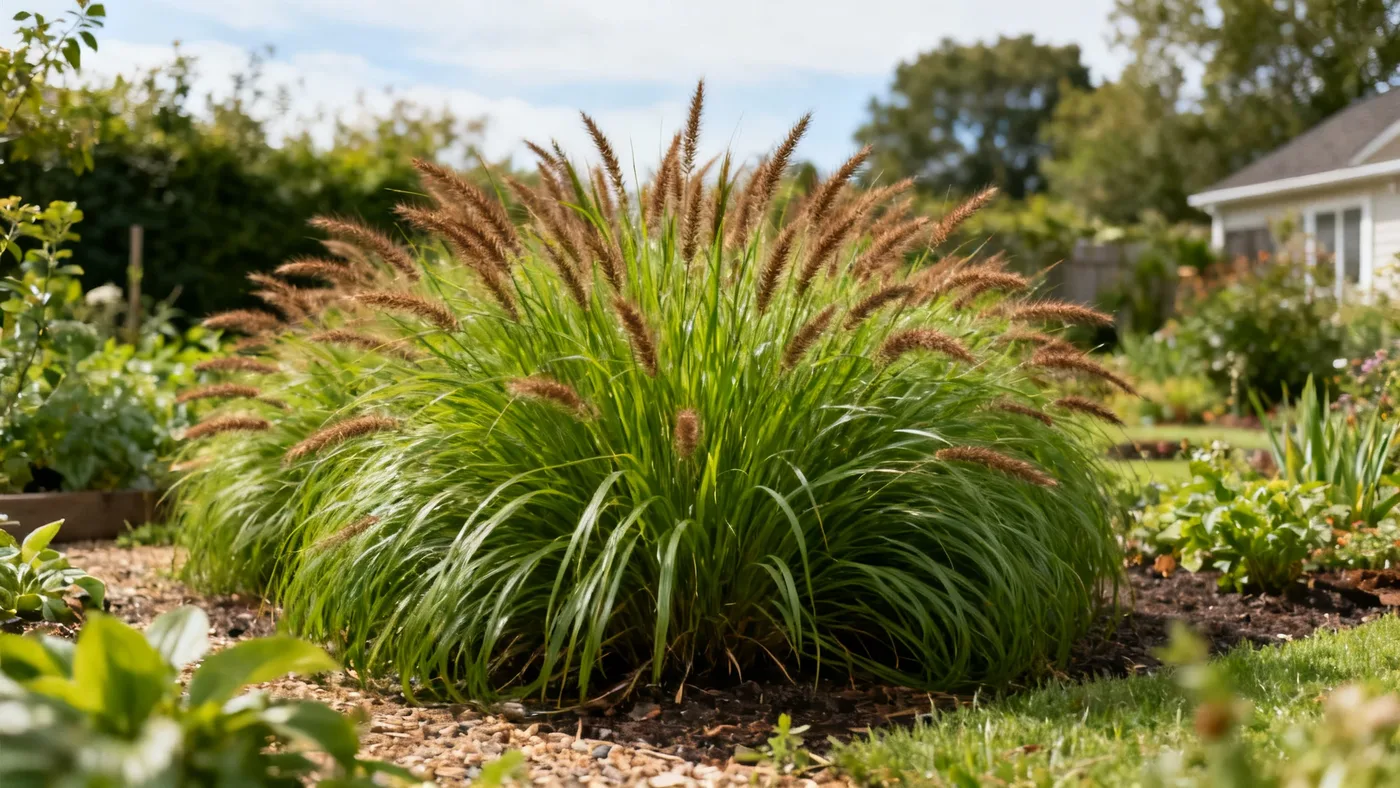
Dwarf Fountain Grass Sun Requirements: How Much Light Does It Need?
Dwarf Fountain Grass (Pennisetum alopecuroides 'Hameln') thrives in full sun, but the amount of light your plant receives will directly affect its growth habit, bloom quality, and overall appearance. If you're wondering whether your garden has enough sun or if you can grow this ornamental grass in shadier spots, this guide walks you through assessing your property, choosing the best planting location, and troubleshooting common light-related issues.
Understanding Dwarf Fountain Grass Sun Requirements
Dwarf Fountain Grass performs best with full sun, which means at least 6 to 8 hours of direct sunlight daily. The plant does tolerate light shade or part shade, but this tolerance comes with a tradeoff: in reduced light, you'll see fewer blooms and a floppier, more open habit. The clump becomes less dense and may sprawl outward rather than maintaining its characteristic tight, fountain-shaped mound.
Think of full sun as the plant's happy place. In USDA zones 5 through 9, where Dwarf Fountain Grass is hardy, the intensity and duration of sunlight varies by season and latitude. A location that receives strong morning and midday sun in cooler zones may offer ideal conditions, while in hotter regions, some afternoon shade can prevent stress on the plant without sacrificing blooms.
How to Measure and Assess Your Garden's Light
Before planting, take time to observe your garden throughout the day. This step takes only a few days but will save frustration later. Here's how to do it:
- Mark the intended planting spot. Use a garden stake, small flag, or even a stick to mark where you're considering planting your Dwarf Fountain Grass. This gives you a fixed point to observe across multiple days.
- Track sunlight at three times of day. Check your marked spot in the morning (around 9 a.m.), midday (around 12 to 1 p.m.), and late afternoon (around 4 p.m.). Note whether it receives direct sun or dappled shade at each time.
- Count consecutive hours of direct sun. Direct sun means the sun's rays hit the ground without obstruction from trees, buildings, or fences. Dappled shade (sunlight filtered through leaves) counts as partial shade. Add up the hours of direct sun your spot receives on a typical clear day.
- Observe for a full week. Clouds, seasonal tree cover, and the sun's changing angle mean one day isn't enough. Spend at least one week noting the pattern. In spring, deciduous trees may block more light than they will in summer after their leaves mature.
- Check for reflected heat and nearby water. Light-colored walls, patios, or water features reflect and intensify heat. If your spot is adjacent to a south-facing white wall, your Dwarf Fountain Grass may receive more intense sun and heat stress than open garden spots.
Once you've gathered this information, you'll know whether your spot qualifies as full sun (6+ hours direct sun), part sun or part shade (3 to 6 hours), or shade (fewer than 3 hours). This assessment is the foundation for a successful planting decision.
Selecting the Right Planting Spot
With your light assessment in hand, follow these steps to choose the best location for your Dwarf Fountain Grass:
- Prioritize full sun locations. Choose a spot that receives at least 6 to 8 hours of direct sun each day, ideally including morning sun. Morning sun dries dew from the foliage, which can help prevent fungal issues and promotes a tighter, more upright habit.
- Avoid afternoon heat stress in hot climates. If you're in USDA zone 8 or 9 where summer temperatures regularly exceed 90 degrees, a location with filtered afternoon shade (such as dappled shade from a deciduous tree) can reduce heat stress without sacrificing bloom production. Ensure the plant still receives at least 5 to 6 hours of direct sun overall.
- Check for drainage patterns. Dwarf Fountain Grass prefers well-drained soil and dislikes constantly wet ground. A site that receives good sun may still be problematic if water collects there. Observe the area after a heavy rain to confirm drainage is adequate.
- Consider wind exposure. While not strictly a light issue, the same open, sunny spots that provide full sun often expose plants to wind. Dwarf Fountain Grass can tolerate wind, but very exposed sites may increase water loss. If your spot is very windy, ensure you can water consistently during the growing season.
- Plan for mature size. Dwarf Fountain Grass reaches 18 to 24 inches wide and 18 to 24 inches tall as a clump, with flower plumes adding another 6 inches of height. Choose a spot where the mature plant won't cast shade on nearby sun-loving plants or be shaded by neighboring plants' future growth.
- Space plants appropriately. If planting multiple Dwarf Fountain Grasses, space them 18 to 24 inches apart for a mass planting or border. This spacing allows each plant to receive adequate light and air circulation.
Troubleshooting Common Light-Related Problems
Sometimes, despite your best planning, light conditions change or aren't what you expected. Here's how to identify and address light-related issues:
- Diagnose a sparse or floppy plant. If your established Dwarf Fountain Grass looks open and sprawling rather than tight and mounded, insufficient light is the likely culprit. Check whether nearby plants or structures have grown to shade your grass. Even a tree that was small when you planted may now cast shade during peak growing season.
- Evaluate competing shade sources. Walk around your plant at midday and look upward. Can you see sky directly above? If trees, structures, or tall perennials are now blocking light, consider pruning back neighboring plants before assuming you need to move the grass.
- Move the plant if necessary. If shading has become permanent or excessive, relocation to a sunnier spot may be your best option. Spring or early fall is the ideal time to move the plant. Dig a wide circle around the clump to preserve as many roots as possible, and transplant to a location with 6+ hours of direct sun. Water thoroughly after transplanting.
- Rule out other causes of floppy growth. Over-fertilizing or consistently wet soil also cause a sprawling habit. Before assuming light is the problem, check your watering and feeding practices. Dwarf Fountain Grass is a light feeder. A single application of balanced slow-release fertilizer in spring is generally sufficient. Excess fertilizer promotes weak, floppy growth.
- Notice bloom differences. Plants receiving less sun produce fewer flower plumes or smaller ones. If blooming is sparse, increased light will usually improve flowering over the following season. The plant's first-year response to improved light conditions may not be dramatic, but by the second year, you should see noticeably more plumes.
Tips and Common Mistakes to Avoid
Tip: Plant in spring after last frost. Spring planting gives your Dwarf Fountain Grass the entire growing season to establish strong roots before winter dormancy. This is especially important if your garden has less than ideal light, as a well-established plant tolerates marginal conditions better than a young one.
Tip: Don't rely on afternoon shade alone. A site that receives afternoon shade but little morning sun may still be too dark. Morning sun is particularly valuable because it helps dry foliage and promotes compact, upright growth.
Tip: Observe your site in all seasons. Summer shade from deciduous trees differs dramatically from spring or fall. A site that looks ideal in June may be shaded heavily by July. Plan your observations across the seasons you'll actually want the plant to thrive.
Mistake: Planting in shade and expecting full bloom. This is a frequent disappointment. You cannot compensate for insufficient light by increasing water, fertilizer, or care. Light is the limiting factor. If your garden is predominantly shaded, Dwarf Fountain Grass is not the right plant for that spot. Choose a true shade-tolerant ornamental grass instead.
Mistake: Forgetting that trees grow. A young tree casting minimal shade when you plant may significantly shade your grass within a few years. Plan for future growth when choosing your spot, or be prepared to relocate the plant if needed.
Mistake: Over-fertilizing to compensate for sparse growth. If your plant looks thin and you assume it needs more nutrients, adding extra fertilizer will actually make the problem worse. The floppy habit you're seeing is often caused by excess fertilizer or water, not nutrient deficiency. Reduce inputs before adding more.
Expected Results and Seasonal Changes
In full sun with proper care, your Dwarf Fountain Grass will develop a dense, fountain-shaped mound of fine-textured, mid-green foliage. Blooming typically occurs from mid to late summer into fall, roughly July through September, though timing varies by region and zone. The creamy tan to buff bottlebrush-like plumes often emerge with a pinkish-purple tint, which mellows as they age.
The plant reaches full mature clump size in 2 to 3 seasons, with roughly 6 to 12 inches of spread and height gained per year while establishing. In full sun, the foliage and plumes will turn golden tan to bronze in fall, providing excellent seasonal interest. This fall color is most vibrant and lasting in full-sun locations.
In partial shade, you can still expect an attractive plant, but the mound may be looser and less dense, and you'll see fewer plumes. Growth rate may also slow slightly. The tradeoff for accepting part-shade conditions is reduced bloom and a less sculpted appearance compared to full-sun plants.
Quick Reference: Dwarf Fountain Grass Light Needs
| Light Condition | Daily Sun Hours | Expected Results | Best For |
|---|---|---|---|
| Full Sun | 6 to 8+ hours direct sun | Dense mound, abundant plumes, vibrant fall color, compact upright habit | Ideal planting choice; best all-around performance |
| Part Sun / Part Shade | 3 to 6 hours direct sun | Looser mound, fewer plumes, floppier habit, acceptable foliage | Acceptable in cooler zones or if shade is afternoon only |
| Shade | Fewer than 3 hours | Sparse blooms, weak growth, open sprawling habit | Not recommended; choose a shade-tolerant alternative grass |
Planting Checklist
- Measure sunlight at your intended site for at least one full week
- Confirm at least 6 hours of direct sun, ideally including morning sun
- Verify soil drains well and isn't waterlogged after rain
- Space plants 18 to 24 inches apart if planting multiple
- Plant in spring after last frost for best establishment
- Water regularly during the first season; the plant appreciates consistent moisture while establishing
- Apply a single spring fertilizer dose only; avoid over-feeding
- Observe the plant after one full growing season and adjust location or neighboring plantings if growth seems sparse or floppy
- Refer to the full Dwarf Fountain Grass care guide for ongoing maintenance, pruning, and seasonal care