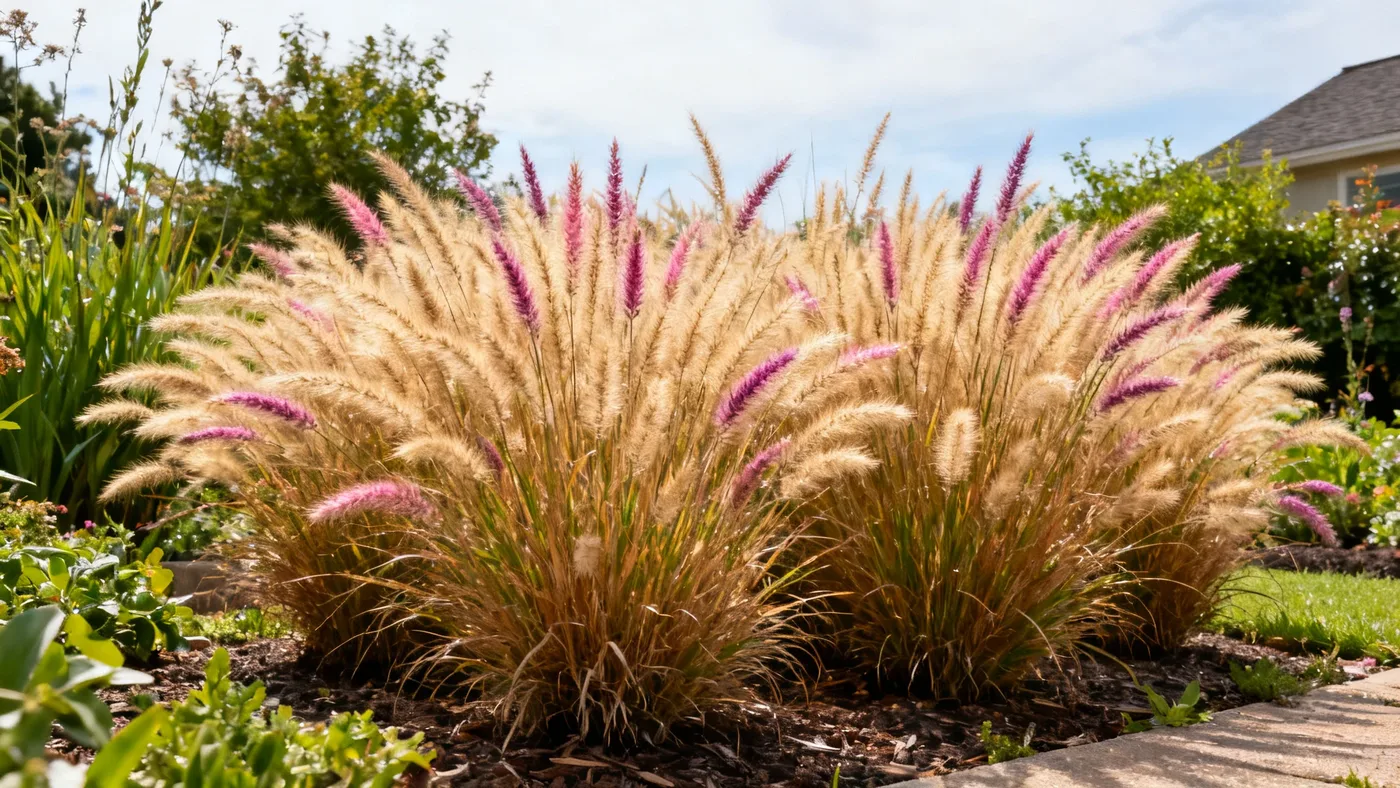
Dwarf Fountain Grass Fall Color: Why It Turns Golden Bronze
Right now, in late September, something quiet but transformative is happening in gardens across zones 5 through 9. The soft green plumes of Dwarf Fountain Grass (Pennisetum alopecuroides 'Hameln') are shifting from cream and tan toward warm bronze and golden tones. If you planted a clump this spring or summer, this color change might surprise you. If you're thinking about planting one, understanding this seasonal shift will help you place it where the fall light makes it glow.
When Dwarf Fountain Grass Changes Color
Dwarf Fountain Grass blooms from mid to late summer into fall, typically July through September, depending on your region and zone. The plumes emerge pinkish-purple, then shift to creamy tan and buff tones as they mature. By late August and September, as temperatures cool and day length shortens, both the foliage and seedheads deepen into golden tan, rust, and bronze hues.
The transition is gradual, not sudden. You'll see the warmth building through August. Peak color usually arrives in September and holds into October in milder zones (8 and 9). In colder zones (5 and 6), the color display intensifies as frost approaches, though the plant's crown and roots are still alive underneath the dried foliage.
The timing of this show depends partly on your exact location and the year's weather. A cool, dry September intensifies the bronze tones. A mild, wet one may stretch the green-to-tan transition over several extra weeks. Either way, the shift happens because the plant is preparing for dormancy. Once night temperatures consistently dip below 50 degrees Fahrenheit, the color deepens fast.
Understanding the Color Transformation
Dwarf Fountain Grass doesn't "die back" in fall the way a perennial flower does. Instead, it enters a dormant phase. The foliage and plumes dry in place, and the color change you see is the plant shifting its chlorophyll and energy down into the crown at soil level, where it overwinters. The leaves and plumes lose their moisture and protective pigments, exposing warmer underlying tones.
Those warm golds and bronzes are real. They're not a sign of disease or stress, but rather the plant's natural seasonal cycle. The fine-textured arching blades and the feathery 24 to 30-inch-tall plumes catch every angle of low autumn sun, which amplifies the warm tones you see.
This is also why the plant's winter interest is considered "good" in the facts. Even after the growing season ends, the dried tan seedheads and foliage persist on the plant if left uncut. They catch light and snow, making the clump visually interesting even in the bleakest weeks. Many gardeners intentionally delay pruning until late winter or early spring specifically to keep this display.
Factors That Influence Fall Color Intensity
Light. Dwarf Fountain Grass needs full sun to perform at its best. A clump in full sun develops more robust plumes and deeper fall color than one in part shade. If your grass is in light or partial shade, expect fewer blooms and a floppier habit, plus less intense bronze tones. Full sun means at least 6 to 8 hours of direct light daily; 8 to 10 is better for peak color and structure.
Moisture during the growing season. A plant that received regular water through summer stores more energy and produces fuller plumes. Dwarf Fountain Grass is drought tolerant once established, but it appreciates consistent moisture in its first season and during the bloom phase. A plant stressed by drought may show fewer, thinner plumes and less impressive fall color.
Fertilizing. This is a light feeder. A single spring application of balanced slow-release fertilizer is sufficient. Over-fertilizing causes floppy growth and can delay the color shift, keeping the plant "pushing green" longer than it should. Restrain yourself in midsummer. The grass will thank you with better form and richer fall tones.
Soil quality. Well-drained soil supports a healthier, longer-lived clump. Dwarf Fountain Grass adapts to average, sandy, or even clay soils, but it dislikes constantly wet ground. Poor drainage can lead to crown rot and weak growth, which means thinner plumes and less color. If you're starting from scratch, amend heavy clay with compost to improve drainage, or plant on a slight slope.
Zone and timing. In zones 8 and 9, the color display stretches longer because frost arrives later. In zones 5 and 6, frost comes sooner, which can actually intensify the color in a brief, brilliant flash. Early cold snaps sometimes deepen bronze tones faster than a gradual cooling does.
How to Showcase Fall Color in Your Garden
Place it where backlight works. Dwarf Fountain Grass is only 18 to 24 inches tall at the clump base, with plumes adding 6 to 12 more inches. Position it where the low autumn sun can shine through or behind the plumes. East-facing or south-facing placements in northern zones let you catch morning or afternoon light. West-facing works too, though intense afternoon heat in zones 8 and 9 can fade color slightly.
Pair it with late bloomers that complement bronze. Purple coneflower (Echinacea) and Black-eyed Susan (Rudbeckia) are still going strong in September. Their warm yellows and purples complement the bronze plumes. Russian sage (Perovskia) offers airy purple-blue tones that make the warm grass glow. Sedum 'Autumn Joy' shifts from pink to rust and bronze itself, creating a coordinated seasonal palette.
Space clusters thoughtfully. A single 18 to 24-inch-wide clump makes a nice accent. For more impact, plant three or five clumps 18 to 24 inches apart in a drift or sweep. Clusters create a continuous band of bronze color that draws the eye and makes a stronger garden statement than isolated plants.
Use it as an edging plant. Dwarf Fountain Grass works well as a border along a path or the front of a bed. Its arching form and golden fall foliage create a natural frame that guides visitors through the garden. The fine texture also softens the edges of hardscape and perennials with bolder leaves.
Keep the view clear until late winter. Do not cut the clump back in fall, even though you might be tempted to tidy the garden. The dried foliage and seedheads protect the crown from extreme cold. Leave them standing until very early spring, when you can cut the entire clump back to 2 to 4 inches as new growth begins to emerge. This is the ideal pruning time for zones 5 through 9.
What Happens After Peak Color
Peak fall color typically lasts 4 to 6 weeks. After that, the bronze tones gradually fade to tan and pale straw. The plant doesn't rot or disappear. It simply sits dormant, still ornamental in a quieter, more neutral way. Snow, if it falls in your zone, clings to the dry plumes and adds a white-on-tan contrast that lasts until the next melt.
In zones 8 and 9, you might still see hints of bronze color as late as November or even early December, especially if fall is mild. In zones 5 and 6, the bronze usually fades by mid-October after a hard frost. Either way, the dried structure remains intact and visually valuable. Don't cut it back until late winter or very early spring.
When you do prune, cut the entire clump back to 2 to 4 inches using sharp pruners or hedge shears. Remove and compost the cut material (unless you want to save some dried plumes for arrangements, which many gardeners do). The newly bare crown will look messy for a few weeks, but new growth will emerge and quickly cover the bare ground.
For more detailed care guidance, see the complete Dwarf Fountain Grass care guide. If you're new to this plant or planning a spring planting, the guide to planting Dwarf Fountain Grass covers soil prep, spacing, and first-season care.
Quick Reference: Fall Color Checklist
| Timing | What to Expect | What to Do |
|---|---|---|
| Late August to early September | Plumes shift from cream to golden tan; foliage begins warming | Let the plant breathe; reduce supplemental watering if rain is adequate |
| Mid to late September (peak color) | Full bronze and golden tones in plumes and foliage; darkest appearance | Enjoy the display; position yourself to catch backlight; take photos for next year's planning |
| October | Color fades to tan; frost may deepen tones briefly | Do not prune yet; dried foliage protects the crown |
| November to February | Pale tan seedheads and foliage persist; snow adds contrast | Leave standing; drought-tolerant and needs no care |
| Late February to early March | New growth begins to emerge; old foliage still dry | Cut entire clump back to 2 to 4 inches; remove and compost the material |