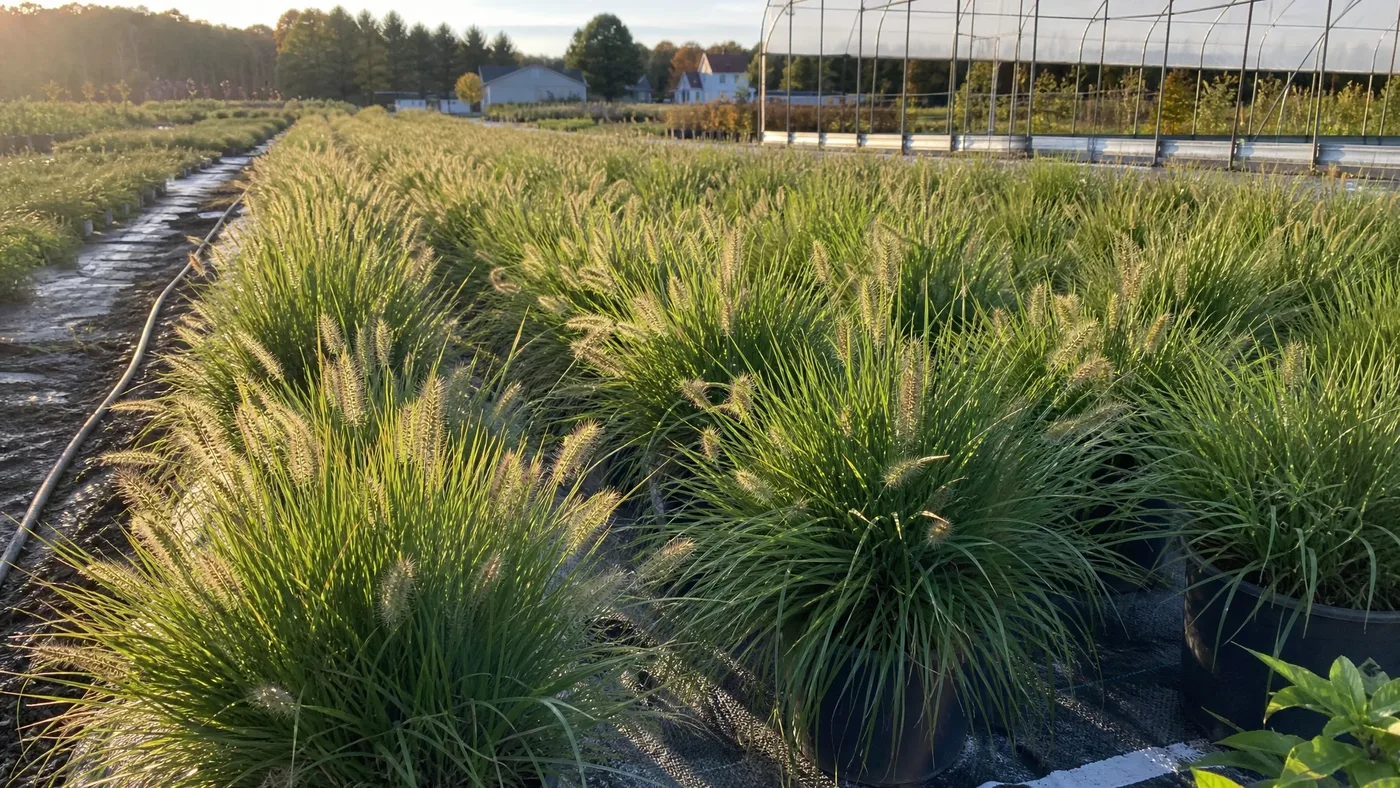
Dwarf Fountain Grass vs Desert Plains: Size and Drought Tolerance
Picture a gardener with a bundle of stakes, pacing off a strip of baked ground beside a gravel driveway. Thirty feet long, full afternoon sun, and no irrigation line anywhere near it. A stake goes in every few steps, and the same question comes with each one: how many plants, and which grass?
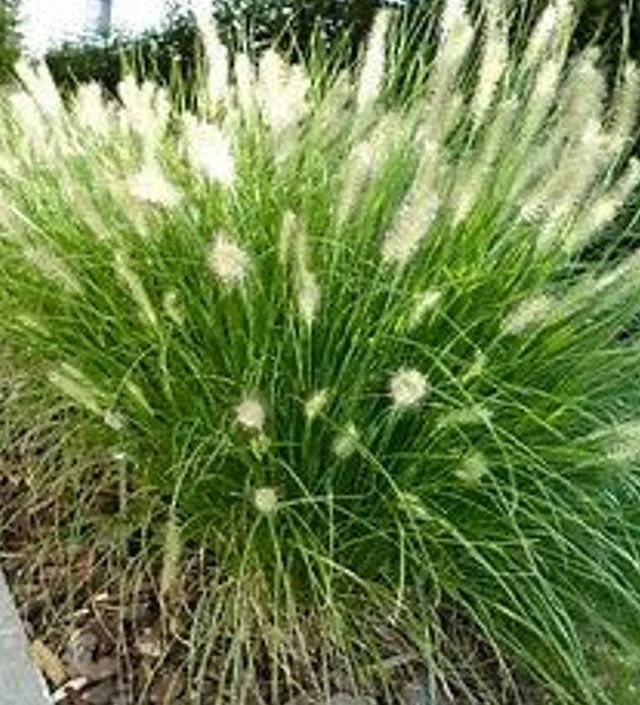
Both candidates are Pennisetum alopecuroides, so the choice comes down to numbers. Buy too big and the row crowds the gravel. Buy too thirsty and you spend August carrying a hose. Read on for the plant count for 30 feet of Hameln, the same strip planted with Desert Plains, how each handles a rainless July, and which one we would put in.
A 30-Foot Driveway Edge With No Hose
Here is the strip we will follow all the way through. It runs 30 feet along the gravel, it faces the afternoon sun, and the nearest spigot is far enough away that you would need a hose and a lot of patience. The soil is hard, lean and fast to dry. The goal is one low, even row that looks tidy against the drive and never needs a schedule.
That description already narrows things. Fountain grass wants full sun, meaning 6 or more hours of direct sunlight a day, and a baked afternoon strip gives it that. The same source lists the species as drought-tolerant once established. The words that matter there are "once established," and we will come back to them.
The numbers below come from published plant data. Treat the rest as a planning walkthrough, not a trial with a stopwatch. Run the same steps on your own strip and your own numbers will follow.
What We Measure Before Buying
Take three measurements before you shop. First, the length of the run. Second, how far the edge of the grass can sit from the gravel, because arching leaves spill outward. Third, how much height you can live with beside a car door. For this strip we call it about 3 feet, with the grass set back from the stone so the leaves do not drag on it. Our spacing guide for borders and mass plantings covers the edge setback in more detail.
Counting Dwarf Fountain Grass Plants for 30 Feet
Hameln is the compact option. The University of Florida's extension publication gives it 2 to 3 feet in both height and spread. Take the middle, 2.5 feet, and use it as your center-to-center spacing.
Thirty feet divided by 2.5 feet is 12. Set the first plant half a spacing, about 15 inches, in from each end of the strip, and the dozen plants fill the run evenly. Stake the 12 spots before you dig anything. It takes ten minutes and shows you the rhythm of the row.
If you want a tighter, more continuous look, planting at the 2 foot end of the range gives 15 plants. We would not go tighter. Crowded clumps compete for the same dry soil, and that is the last thing you want on a strip with no hose.
The Row in Year Two
Fountain grass is medium in growth rate, so year one looks sparse. Expect gaps of bare ground between small clumps, and resist the urge to fill them. By year two the clumps should be reaching toward each other, and by the third the leaves touch and form a single scalloped line. It stays under 3 feet, which suits a driveway edge.
Hameln also does not reseed. The same Florida publication says plainly that, unlike the species, this cultivar does not re-seed itself. For a strip beside gravel, that means no seedlings popping up in the stone, which is a real point in its favor.
Swapping Desert Plains Into the Dwarf Fountain Grass Row
Now rerun the same 30 feet with Desert Plains. This selection is bred within the same species for Great Plains conditions, and it grows noticeably larger, at 3 to 4 feet. Its purple blooms come in July and August. Hameln's are pink and white and run longer.
A bigger clump needs more room. Spacing it at about 3.5 feet, the middle of that range, gives roughly 9 plants for the strip. That is three fewer than the Hameln row, with a gap of a full foot between centers.
The table shows the two rows side by side, using the figures above.
| Hameln | Desert Plains | |
|---|---|---|
| Mature height | 2 to 3 feet | 3 to 4 feet |
| Spacing used | About 2.5 feet | About 3.5 feet |
| Plants for 30 feet | 12 | About 9 |
| Bloom | Pink and white, July through October | Purple, July and August |
The height gap is where the driveway matters. A 4-foot grass beside a drive blocks the view of anyone backing out, and it leans into the gravel. A grass under 3 feet does not. If your goal is a low, even row, that gap counts for more than it looks on paper.
Dwarf Fountain Grass Through a Rainless July
This is the test the whole comparison hangs on. Imagine the first full summer after planting, with the weeks of July passing without a drop. Neither row has a hose. Here is what we would watch for, and in what order.
Early in the Dry Stretch
In the first week or two, nothing alarming happens. Both rows hold green. The soil is dry to a depth of a few inches, but the roots are still working below that. This is also when the first plumes start. Hameln shows up with pink-and-white blooms that carry on through October, while Desert Plains opens its purple spikes right in the dry window.
Deep Into the Heat
By the third or fourth week, the leaves tell you the story. Blades fold or roll lengthwise in the afternoon to cut water loss, then open again by evening. That is normal and not a call for the hose. The warning sign is rolling that persists into the next morning, or tips going brown and crisp.
The species is drought-tolerant once established. Desert Plains is the one bred for drier ground, so we expect it to hold its color a little longer. One of the most common questions we get is whether the bigger grass is the tougher one. For this pair, the answer is yes, but the margin is smaller than the difference in size.
Pulling the Hose Out for Dwarf Fountain Grass
Now the watering log. We will not put invented soaking counts here, because they depend on your soil and your rain. What we can give you is the pattern that works, and the point where the hose goes away.
Both rows need help in their first season. Roots have to reach down before the drought tolerance applies at all. Give each new plant a slow, deep soaking when you set it in, then another whenever the top few inches of soil are dry and the weather is hot. Our watering guide on establishment versus mature needs lays out the whole schedule.
The log looks like this over the first year:
- Planting day: a deep soak for every plant, and again a few days later.
- First summer: a deep soak only when a dry spell drags on and the leaves stay rolled into the next morning. Water the Hameln row first.
- Second summer: skip the hose unless the dry stretch is truly severe.
Hameln will ask for the hose a bit sooner, and Desert Plains a bit later. In our rows, the day you stop carrying water is the day the plants have gone a full summer without wilting past evening. Check your local extension service for what counts as an unusual drought in your area, then let the plants set the schedule.
Pot Sizes and Prices at the Nursery Bench
Pot size and price change the arithmetic. We can't quote you a price, since benches vary, but the structure of the decision is the same everywhere. The count is fixed by the spacing, so you are choosing between more small plants and fewer large ones.
| Option | Plants | What it costs |
|---|---|---|
| Hameln, small pots | 12 | 12 times your small-pot price |
| Hameln, larger pots | 12 | 12 times your larger-pot price |
| Desert Plains, small pots | About 9 | 9 times your small-pot price |
Fill in the right-hand column at the bench with the tag price. Desert Plains needs three fewer plants, so even if each costs a little more, the row can come out close to even. Hameln in small pots is often the cheapest way to cover the strip, but the clumps take longer to meet.
On a strip with no hose, we lean toward spending a bit more on larger pots for the first planting, because a bigger root ball gets through the first dry summer more easily. Our buying guide on pot size goes through the trade-offs in detail.
How the Finished Row Turned Out
Here is the end-of-season picture, and the comparison in plain terms. Measured against a tape, the two rows differ by about a foot in height and a foot in spacing. Hameln gives you 12 plants that stay under 3 feet and bloom pink and white into fall. The foliage turns bronze and stays fairly intact over the winter, so the row still looks good after the first frost.
Desert Plains gives you about 9 larger clumps and a stronger dry-weather record, but it runs to 4 feet and drifts toward the gravel.
For this strip, with the goal of one low, even row, we would plant Hameln again. The drought gap is small, and the first-season hose work covers it. The height gap shows every day. Choose Desert Plains if your strip is wide open with real space around it, you want a taller screen, or you truly cannot water even in year one.
Measure First, Then Pick Your Grass
Re-measure your own strip, do the plant count before you shop, and let the dry-spell results decide. Divide the length by the spacing, check the height against the gravel and the car door, and plan for water in the first season either way. After that, both grasses mostly look after themselves.
Dwarf Fountain Grass
Nursery-grown Dwarf Fountain Grass in sizes from Quart Plant, shipped to your door.
From $49.49
Shop Now →Out in our rows, Dwarf Fountain Grass gets a spot with plenty of direct sun and ground that sheds water quickly, plus one feeding in spring, and that keeps each clump compact and sturdy. Every plant we ship is grown by us in those same rows, and we only raise top-quality grasses, Hameln included. Once you have measured your strip and decided on your grass, have a look at our Dwarf Fountain Grass.