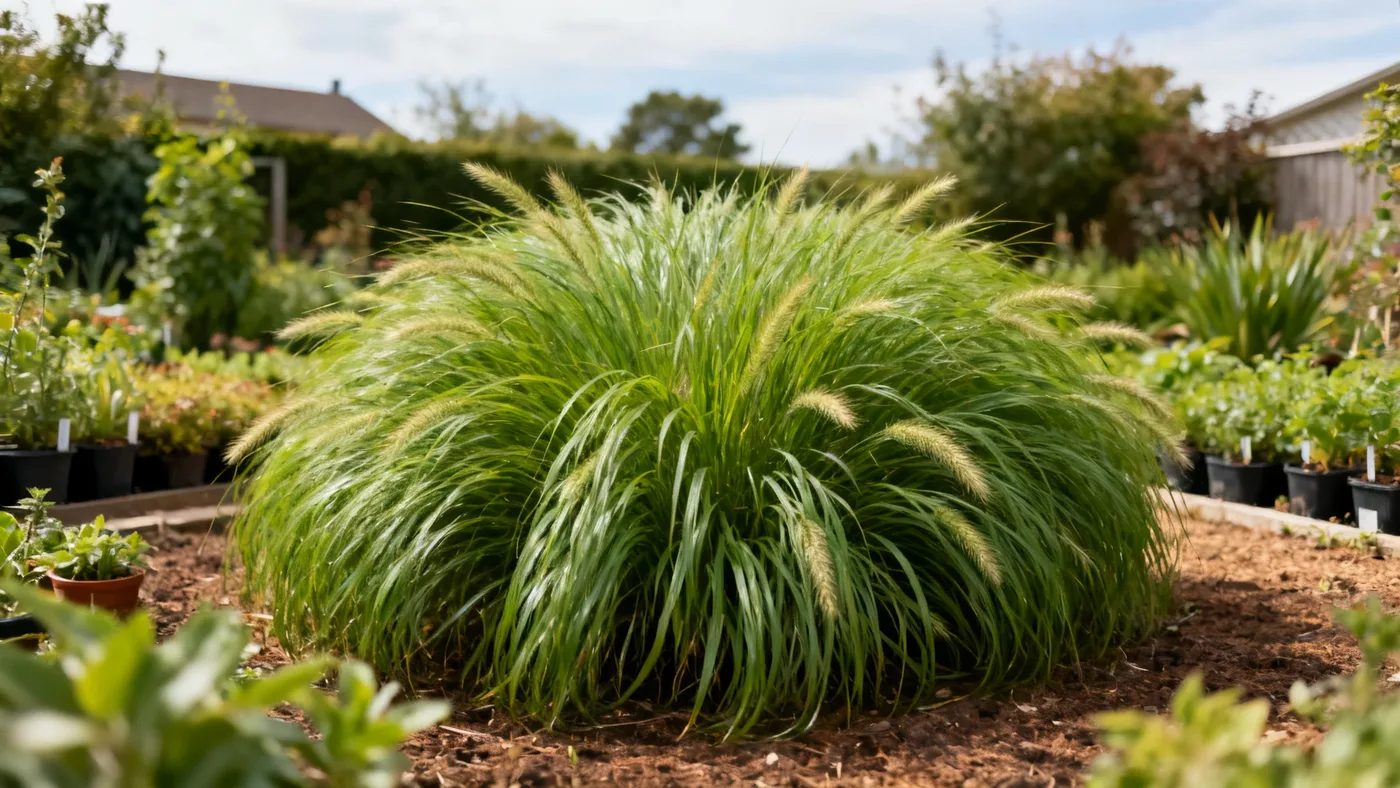
Watering Dwarf Fountain Grass: Establishment vs Mature Needs
Watering is one of the most important things you'll manage when growing Dwarf Fountain Grass (Pennisetum alopecuroides 'Hameln'). Get it right early on, and your plant will reward you with a three-season show of fine-textured foliage and creamy tan plumes. Get it wrong, and you risk crown rot or weak, floppy growth. The good news: once established, this plant is genuinely drought tolerant, so after year one, you'll spend far less time with the hose than you did initially.
Understanding the Two-Phase Watering Approach
The biggest shift in watering needs happens around the end of year one. During establishment (spring through fall of the first growing season), Dwarf Fountain Grass needs regular, consistent moisture to develop a strong root system and reach full clump size in 2 to 3 seasons. Once established, typically by year two, it becomes drought tolerant and actually prefers drier conditions between waterings. Understanding this difference is the key to success.
Many home gardeners make the mistake of treating a new plant like a mature one, or continuing to coddle a mature plant like it is new. This guide walks you through both phases so you can adjust at the right time.
Materials and Tools You'll Need
- Garden hose with adjustable nozzle or soaker hose
- Moisture meter (optional but helpful for learning)
- Mulch such as compost, bark chips, or straw
- Well-drained potting soil (if planting in containers)
- Watering can for hand-watering or spot checks
Establishing Your Dwarf Fountain Grass: First-Year Watering Steps
During the first growing season, your plant is building the root system it will rely on for the rest of its life. This is not the time to let the soil dry out completely. At the same time, waterlogged soil invites crown rot and weak growth.
Step 1: Water immediately after planting.
Newly planted Dwarf Fountain Grass needs a thorough watering right after it goes into the ground. This settles the soil around the roots and eliminates air pockets. Water until the soil is moist 6 inches deep and water begins to drain freely from the bottom.
Step 2: Set a frequent watering schedule for the first 4 to 6 weeks.
During the initial establishment phase, water every 2 to 3 days if your region is not receiving rain. Check the soil 2 inches down with your fingers: if it feels dry, it is time to water. Your goal is to keep the soil consistently moist but not waterlogged. Container-grown plants dry out faster than in-ground plants and may need water every other day during hot weather.
Step 3: Apply mulch around the base.
After planting, add 1 to 2 inches of mulch around the clump, keeping it at least 2 inches away from the crown to reduce disease risk. Mulch helps retain moisture, keeps soil temperature stable, and suppresses weeds. This is especially valuable during the first season when you are building root depth.
Step 4: Transition to deeper, less frequent watering by week 8 to 12.
Once the plant shows new growth and appears to be actively establishing, gradually space out waterings to once per week if no rain falls. Water deeply, aiming for 1 to 1.5 inches per week from rainfall or irrigation combined. This encourages the roots to go deeper into the soil instead of staying shallow. Deep roots make the plant more drought resilient later on.
Step 5: Monitor and adjust through the rest of year one.
Continue weekly watering through the growing season (spring through early fall). The plant gains roughly 6 to 12 inches of spread or height per year while establishing. By late summer of year one, you should notice the plant is not wilting as quickly between waterings. This signals that roots are going deeper and establishment is progressing.
Watering Mature, Established Plants (Year Two and Beyond)
Once your Dwarf Fountain Grass has filled in and new growth appears reliably without constant attention, the watering rules change. Mature plants are much more forgiving and prefer drier conditions between waterings.
Step 1: Assess whether your plant is truly established.
Dwarf Fountain Grass typically reaches full mature clump size (18 to 24 inches wide and 18 to 24 inches tall, or 24 to 30 inches including flower plumes) in 2 to 3 seasons. Once it has filled in and you can see it thriving without daily checking, it is established and drought tolerant.
Step 2: Water only during dry periods.
Mature Dwarf Fountain Grass thrives on average moisture. This means you water when the soil 3 inches down feels dry to the touch. In most regions, once-weekly deep watering during the growing season (roughly April through September, depending on your zone 5 to 9 location) is enough. Do not water on a schedule; water only when the soil is actually dry.
Step 3: Rely on rainfall when possible.
One of the joys of a mature, established Dwarf Fountain Grass is that it tolerates drought well. If your area receives at least 1 inch of rainfall per week during the growing season, you often do not need to add supplemental water at all. Many nurseries grow this plant with minimal supplemental water once establishment is complete.
Step 4: Reduce watering in late summer and early fall.
As the plant transitions to dormancy in late August and September, water less frequently. The soil should remain lightly moist but not wet. Overwatering in fall increases crown rot risk and does not benefit the plant.
Seasonal Watering Adjustments Across Zones
Spring (Zones 5-9)
After new growth emerges in late March or April, resume regular watering if spring has been dry. Container plants and newly planted specimens need more frequent watering than mature in-ground plants at this time. This is the beginning of the active growing season.
Early to Mid-Summer
This is the peak growing season and bloom time, roughly mid-July through September. Flower plumes emerge, and new foliage is expanding. If rainfall is light, stick to your weekly deep-watering schedule, applying 1 to 1.5 inches per watering. Container plants may need water every 2 to 3 days in hot weather.
Fall and Winter
Once hard frost arrives (around October in most zones), stop supplemental watering. The dried foliage and seedheads protect the crown over winter. The persistent tan color and seed heads catch light and snow beautifully. Do not water during dormancy; frozen or waterlogged soil around a dormant crown invites crown rot.
Common Mistakes and How to Avoid Them
Mistake 1: Watering mature plants on a schedule instead of checking soil moisture first.
The most common error is watering every Saturday or every week regardless of whether the plant actually needs it. Dwarf Fountain Grass prefers drier conditions between waterings once established. Overly wet soil leads to crown rot, yellowing foliage, and floppier, weaker growth. Always check the soil 3 inches down with your fingers or a moisture meter before watering. If it feels moist, skip watering and check again in 2 or 3 days.
Mistake 2: Planting in poorly drained soil and hoping irrigation schedules will fix it.
Even though Dwarf Fountain Grass is adaptable to average soil, it dislikes constantly wet ground. If your native soil is heavy clay or stays soggy after rain, amend it with compost or coarse sand to improve drainage. Poor drainage will cause root and crown rot regardless of how carefully you time your waterings. This is a soil preparation issue, not a watering-schedule fix.
Mistake 3: Shallow, frequent watering instead of deep, less frequent watering.
Watering lightly every day or every other day trains roots to stay shallow, making the plant more dependent on frequent water. Instead, water less often but deeply, applying 1 to 1.5 inches of water per session. This encourages roots to penetrate deeper into the soil and become more drought resilient.
Mistake 4: Watering during dormancy.
Once the plant is fully dormant and frost has turned the foliage tan (late October or November in most zones), stop watering. Adding water to a dormant plant can rot the crown, especially in heavy soil or wet winters. The dried foliage provides winter protection, and the plant does not need or want water until spring.
Mistake 5: Skipping mulch, especially in year one.
Mulch seems optional, but it is an investment during establishment. It keeps soil temperature consistent, retains moisture, suppresses weeds, and improves soil structure over time. Apply 1 to 2 inches after planting, keeping it away from the crown. Refresh mulch each spring to maintain this benefit.
What to Expect and When to Troubleshoot
With proper watering during establishment, you should see steady growth by midsummer of year one. The plant will gain 6 to 12 inches in height or width. By year 2 or 3, it will reach full mature size (18 to 24 inches wide and tall as a clump).
By year two, if watering has been consistent and the plant is established, it should need supplemental water only during extended dry periods of more than two weeks without rain. The foliage will appear fuller, the color will deepen to mid-green, and flower plumes will emerge reliably in mid to late summer, turning from pinkish-purple when first emerging to creamy tan and golden brown by fall.
If your plant looks stressed, droopy, or develops yellowing foliage even after rain or watering, the issue likely is crown rot from poor drainage rather than an incorrect watering schedule. Check that water drains away within an hour of watering. If it sits on the surface or takes much longer to drain, your soil needs amendment or the planting location may need to be reconsidered. For comprehensive care guidance, see the full care guide.
Watering Checklist and Quick Reference
| Phase | Timing | Watering Frequency | Depth per Session | Key Notes |
|---|---|---|---|---|
| Establishment: Weeks 1-6 | Spring, right after planting | Every 2-3 days or when top 2 inches soil is dry | Moist 6 inches deep | Apply 1-2 in. mulch; avoid waterlogging |
| Establishment: Weeks 8-12 | Late spring through early summer | Once per week if no rain | 1-1.5 in. total (rain + irrigation) | Transition to less frequent, deeper watering |
| Establishment: Rest of Year 1 | Mid-summer through fall | Weekly or every 10 days | 1-1.5 in. if soil is dry | Reduce frequency as plant matures |
| Mature, Growing Season (Year 2+) | April through September | Weekly during dry spells; rely on rain if available | 1 in. from rain + irrigation combined | Check 3 in. down before watering; skip if moist |
| Fall Transition | October through early November | Taper down; water only if soil is very dry | Lightly moist only | Reduce to prevent crown rot |
| Dormant | Late November through March | No supplemental water | None | Dried foliage protects crown; no watering |