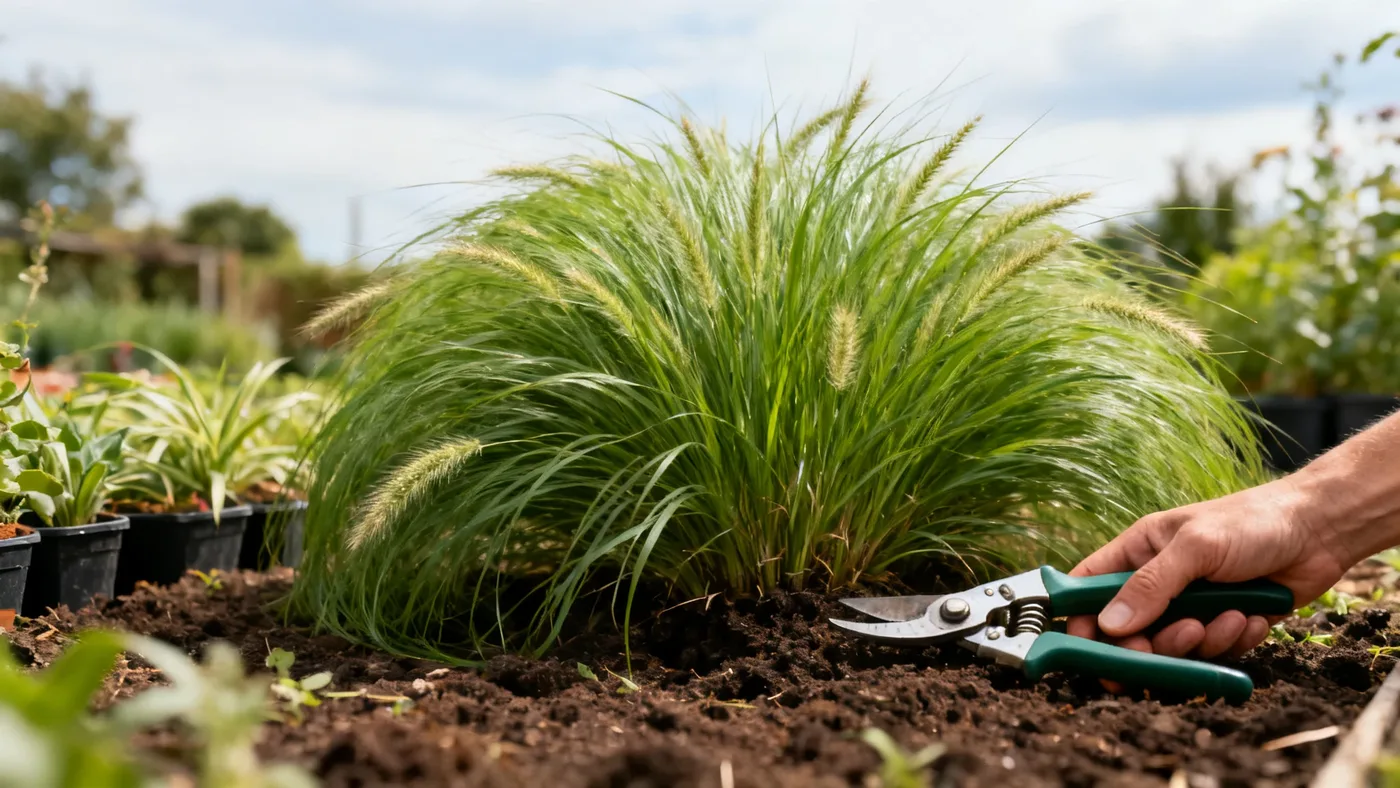
When and How to Cut Back Dwarf Fountain Grass
Cutting back Dwarf Fountain Grass is one of the most important tasks you can perform each year. Unlike many perennials, this warm-season ornamental grass needs a hard reset in late winter to thrive. Skip this step, and you risk a weak clump with dead growth in the center and a tangled, unruly appearance. Do it right, and you'll reward yourself with vigorous new shoots, fuller foliage, and plenty of blooms come mid-summer.
The good news: this job takes an hour or two, requires only basic tools, and the rules are straightforward. Let's walk through exactly when to prune, what you'll need, and how to do it step by step.
When to Prune Dwarf Fountain Grass
Timing is everything with Dwarf Fountain Grass. The window for pruning fountain grass opens in late winter and closes in very early spring, before new growth emerges. In USDA zones 5 through 9, this typically means late February through mid-March, but your exact timing depends on your local climate.
If you're in zone 5, wait until late February or early March, when soil frost begins to ease. In zones 6 through 8, late February or March works well. Gardeners in zone 9 can prune in early to mid-February. The goal is to cut before the grass breaks dormancy and sends up tender new leaves.
Here's the critical rule: do not prune in fall, even though the foliage looks spent and golden. That dried foliage and dense crown actually protect the plant's heart through harsh winter weather. Cutting it back in autumn exposes the vulnerable growing point to freeze damage, frost heave, and rot. Wait for spring.
To gauge readiness, look for two signs. First, the foliage will still be tan or bronze, not actively growing. Second, the soil will be thawing if you poke it with your finger. If you see fresh green shoots already emerging from the crown, you've waited a bit long, but you can still prune carefully without harming the plant.
Materials and Tools You'll Need
This job is low-tech. Gather these items before you start:
- Hedge shears or loppers: A sharp pair of hedge shears (24 to 30 inches long) or hand-held loppers will cut through the dense clump far faster than pruning shears. If you've never owned hedge shears, this is a good reason to get a pair. They're inexpensive and last years.
- Heavy-duty work gloves: Dwarf Fountain Grass has fine, sharp blades. Wear thick leather gloves to protect your hands and wrists. The tiny leaf edges can cause mild irritation if they contact bare skin for long.
- Safety glasses: Bits of cut grass fly during trimming. Lightweight, clear safety glasses keep debris out of your eyes.
- Tarp or drop cloth: Optional but useful. Lay a tarp around the base to catch cut material and make cleanup easier.
- Rake or broom: You'll need this to clear away loose cut material after pruning.
- Twine or garden ties: Optional. If your clump is very large (over 24 inches wide), you can bundle the foliage with twine before cutting to keep it from spreading and to make debris removal neater.
Step-by-Step Pruning Instructions
Follow these steps to cut back your Dwarf Fountain Grass safely and effectively.
- Check the weather forecast. Choose a calm day for pruning. High winds will scatter cut foliage everywhere. Avoid pruning just before a heavy rain, as wet conditions don't affect the cut itself but make cleanup messier.
- Put on protective gear. Slip on your work gloves and safety glasses. This protects you from the sharp leaf blades and flying debris.
- Inspect the clump. Walk around the base and look for any new green growth poking through. If green shoots are showing, prune gently to avoid cutting living tissue. If the clump is still dormant (all tan or bronze), you can be more aggressive.
- Bundle the clump (optional but recommended). If your Dwarf Fountain Grass is 20 inches or wider, wrap soft garden twine around the clump loosely, about 6 inches from the base. This bundles it together and prevents the cut foliage from falling everywhere. Tighten gently, but don't squeeze hard enough to damage the crown.
- Cut the clump to 2 to 4 inches tall. Using hedge shears, cut horizontally across the top of the clump, leaving a stubble 2 to 4 inches high. Make this your target height. Aim for consistency, working all the way around the plant. If the clump is very thick or dense, cut from multiple angles (top, then sides) to access all the foliage. Work slowly and steadily. There's no need to rush this step.
- Remove the twine (if used). Untie the bundled foliage and gently pull it away from the crown. The cut foliage will come away in large handfuls.
- Rake up all cut material. Use a rake or broom to clear away loose bits of grass, leaves, and debris from the crown and surrounding soil. You want to expose the bare crown and remove any dead plant matter that could harbor disease or pest overwinters.
- Inspect the crown. Look at the very center of the clump. You should see fresh, pale-colored shoots or small nubs starting to emerge. If you see mushy brown areas, the crown may have begun to rot, but Dwarf Fountain Grass rarely suffers this problem in well-drained soil.
- Dispose of or compost the cut material. The dried foliage is safe to compost if you have an open pile. It breaks down easily. Otherwise, bag it for yard waste collection.
- Clean your tools. Wipe blade residue from your shears with a dry cloth. Optionally, wipe the blades with rubbing alcohol on a rag to disinfect them, then dry them. This prevents disease spread to other plants if you prune multiple gardens.
Tips for Success
Bundle large clumps. If your plant has grown for several years, it may be 24 inches or larger in width. Bundling with twine makes the job neater and lets you see what you're cutting more clearly. It also keeps loose foliage from matting down into the crown.
Cut to 2 to 4 inches, not shorter. You want to leave enough stubble to protect any tender new growth below and to give the plant something to push from. Cutting to bare soil risks damage to the growing point. If you accidentally cut too short, the plant will recover, but it starts the season behind.
Never cut into the crown. The crown is the pale, thick base where new shoots originate. If you accidentally cut into living crown tissue (you'll see pale or white tissue, not dead tan), stop and let the plant heal. Don't try to remove every last bit of old foliage.
Plan for the worst case. In a particularly harsh winter or in zone 5, some of the crown may suffer frost damage. If you see small dead patches when you prune, they're usually minor. The plant almost always bounces back and fills in around the damaged spot by mid-summer.
Don't overthink the height. "2 to 4 inches" is a range, not a prescription. 3 inches is fine. 2.5 inches is fine. The plant is forgiving within this window.
What to Expect After Pruning
Right after you finish, your Dwarf Fountain Grass will look like a stubble field. This is normal and temporary. Within 2 to 3 weeks, you'll see pale green shoots emerging from the crown. By late spring, the clump will be lush and green again. By mid to late summer (roughly July through early September, depending on your zone), the plant will send up its distinctive bottlebrush-like plumes, creamy tan to buff in color, often tinged with pinkish-purple when first emerging.
A well-pruned clump typically grows more vigorously than a neglected one. You may notice denser foliage and more abundant blooms. The plant will also look more tidy and formal, with a cleaner fountain shape rather than a ragged or open center.
If you want to learn more about year-round care for this grass, see our complete Dwarf Fountain Grass care guide.
Quick Pruning Reference
| Step | Timing or Detail |
|---|---|
| When to prune | Late winter to very early spring (zones 5-9: late Feb to mid-Mar) |
| Exact height to cut | 2 to 4 inches from the soil line |
| What NOT to do | Do not prune in fall; do not cut into the crown; do not leave foliage taller than 6 inches |
| Tools needed | Hedge shears, heavy gloves, safety glasses, rake, optional twine |
| Cleanup | Rake away all cut debris from the crown immediately |
| Expected regrowth | New shoots visible in 2-3 weeks; full clump by late spring |
| Bloom time after pruning | Mid-summer into fall (July through September, region-dependent) |
| How often to prune | Once per year, every spring |
With sharp shears, a calm day, and 1 to 2 hours of time, you can transform a tired, overgrown clump into a healthy, vigorous plant ready for its best growing season. Follow these guidelines, and your Dwarf Fountain Grass will reward you with years of reliable color and graceful form.