Dwarf Fountain Grass Blooms: When and How Long the Plumes Last
Right now, in late September, dwarf fountain grass is at its best. If you planted one this spring or already have an established clump in your garden, chances are it's putting on its annual show right now, with creamy, tan plumes rising above the fine green foliage. This is the moment when dwarf fountain grass becomes impossible to ignore, and understanding when those plumes emerge, what to expect from them, and how to extend their season will help you get the most from this reliable ornamental.
When Does Dwarf Fountain Grass Bloom?
Dwarf fountain grass blooms mid to late summer into fall, with most regions seeing plumes from July through September. The exact timing depends on where you garden. In warmer zones (8 and 9), blooming often starts in mid-July. In cooler zones (5 and 6), expect plumes to emerge in August, sometimes not reaching full color until September. Late summer heat and shortening daylight hours are what trigger flower production, so the timing shifts slightly depending on your local climate.
Even plants purchased as nursery divisions in spring will bloom in their first year, so you do not need to wait multiple seasons to see plumes. A rooted plant in a quart or #1 container, planted in late spring after the last frost, should produce at least a few flowering stems by late July or August in most zones.
This is important if you are gardening in colder zones (5-6): blooming comes later, but it will still happen. Give the plant consistent water through July and August, and you will see the first flower stems emerge before autumn. The period from emergence to full, showy plumes usually takes 3 to 4 weeks.
What Color Are the Plumes?
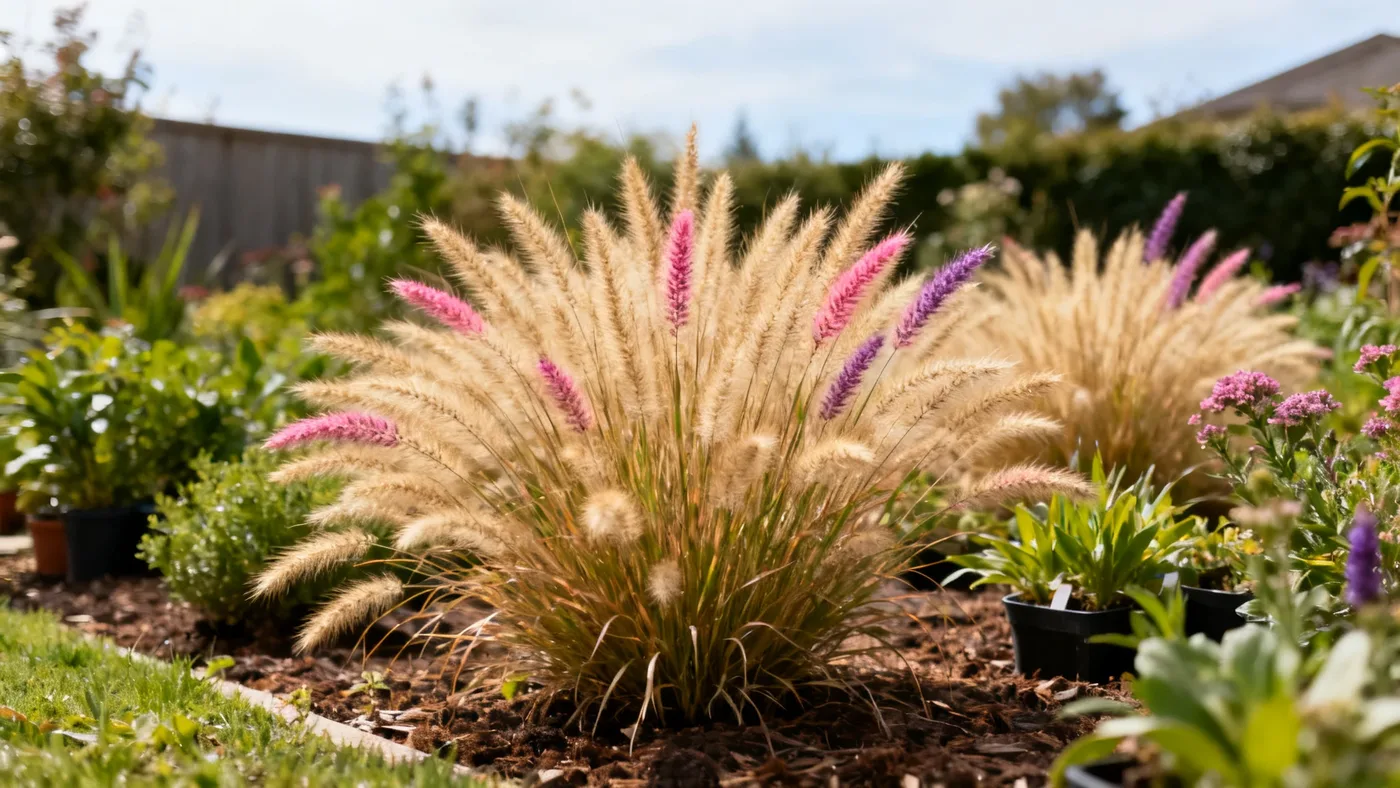
When dwarf fountain grass plumes first emerge, they show pinkish-purple coloring at the tips, a soft, almost mauve tone that catches the light beautifully. As the plumes mature and dry, they shift to a creamy tan or buff color, which is what most gardeners picture when they think of the classic dwarf fountain grass look. This color transition takes 1 to 2 weeks. If you have several clumps, you will often have both the pink-tinged young plumes and the mature tan ones visible at the same time, which creates a layered, dynamic appearance.
The plumes themselves are bottlebrush-like in form, feathery and soft to the touch, and they rise 6 to 12 inches above the foliage of an established clump. A mature plant in clump form reaches 18 to 24 inches tall, but with the flower plumes extended, the total height is 24 to 30 inches. This makes dwarf fountain grass a sturdy mid-border plant that does not disappear into the garden and does not tower over everything else.
How Long Do the Plumes Last?
Once the plumes reach full tan color, they persist for many weeks. From the time they shift from pink to buff, you can expect them to remain ornamental from late summer through most of October and into November in many zones. The plumes do not shatter or drop the way some flowers do; instead, they gradually dry and bleach over time, taking on a pale golden or even silvery cast as fall deepens and winter approaches.
This extended display is one of the main reasons dwarf fountain grass is so valuable in the fall garden. While most perennials have finished blooming by September, your dwarf fountain grass is just hitting its stride. The plumes hold up well through wind and rain, and they actually improve with frost, as the cool nights deepen the coloring and add texture to the overall effect.
In zones 5-7, the dried plumes and foliage persist all winter if you leave them uncut. They turn golden tan to bronze, and they catch snow and frost beautifully, adding visual interest to the dormant garden. This is valuable winter interest, especially in regions where evergreens alone dominate the season.
Seasonal Care to Support Strong Bloom
If you want abundant plumes, start in summer. Dwarf fountain grass is a light feeder, but a single application of balanced slow-release fertilizer applied in spring (as new growth emerges) will support steady, sturdy growth without over-stimulating the plant. Too much fertilizer causes floppier growth and can reduce flower production, so resist the urge to feed again mid-season.
Watering is more important. Dwarf fountain grass appreciates regular moisture during its first season, and consistent water from June through August (the bloom-building months) pays off with more plumes and a fuller clump. Once established (after year one), it is drought tolerant, but supplemental water during dry spells in summer will still reward you with more flowers.
Sunlight matters too. Dwarf fountain grass blooms most reliably in full sun. In part shade, it still flowers, but the plumes are fewer and the habit becomes floppier. If your plant is getting less than 6 hours of direct sun, moving it to a brighter spot will improve bloom production dramatically.
Avoid pruning in fall. Many gardeners are tempted to cut back the dried foliage and plumes in late September or October, but the dormant clump actually benefits from that protective cover through winter. The dried foliage insulates the crown and reduces frost damage. Wait until late winter or very early spring (late February through early March, depending on your zone) to cut the entire plant back to 2 to 4 inches above ground level. By then the worst of winter is over, and new growth will emerge shortly after pruning.
Enjoying Blooms Through Fall and Winter
One of the best features of dwarf fountain grass is how the plumes look as they age. The pale tan color is subtle enough to pair with fall asters, sedums, ornamental cabbage, and other cool-season bloomers. The fine texture of the plumes softens more rigid garden forms, like coneflowers or black-eyed Susan seedheads.
In mixed borders, dwarf fountain grass plumes are particularly striking when backlit by morning sun. Position plants where you can see them from an indoor vantage point on grey autumn mornings, and you will understand why it is worth the garden space. The dried plumes catch even low-angle light and glow. Paired with purple coneflower (Echinacea), autumn joy sedum, or Russian sage (Perovskia), dwarf fountain grass creates a coordinated, season-long display that extends well past the first frost.
If you want to use the plumes in indoor arrangements, cut them once they have shifted to tan color but while they are still flexible (not brittle). They will continue to dry indoors and make long-lasting dried arrangements that hold their color for months. This is a simple way to extend the season even further.
Why Now Is the Time to Plant
If you have been on the fence about adding dwarf fountain grass to your garden, September is a good time to plant in zones 7-9, as long as you can provide regular water before hard frost (typically 8 to 10 weeks). The plant will have time to establish roots before winter dormancy and can bloom the following summer. In cooler zones (5-6), it is better to wait until spring after the last frost to plant, but you can still get a good-sized plant into the ground in early October if your soil is not yet frozen.
For more details on planting, spacing, and year-round care, see the complete dwarf fountain grass care guide, which covers soil prep, watering schedules, and long-term maintenance.
Quick Reference: Dwarf Fountain Grass Bloom Timeline
| Zone | Bloom Start | Plume Color Peak | Ornamental Duration | Best Care Action |
|---|---|---|---|---|
| 5-6 | August | September | Late September through November | Consistent water July-September; prune late February-early March |
| 7-8 | Mid-July to early August | August-September | August through November+ | Regular water June-August; leave dried foliage for winter interest |
| 9 | Mid-July | Late July through September | July through December | Reliable performance; drought tolerant once established |
Plume Color & Persistence Checklist
- Plumes emerge pinkish-purple; shift to creamy tan over 1-2 weeks
- Mature height with plumes: 24-30 inches in an established clump
- Ornamental life: 6+ weeks from full color to late fall/early winter
- Full sun produces more plumes; part shade reduces flowering
- Single spring fertilizer application supports blooms; over-feeding causes floppiness
- Do not prune in fall; wait until late winter to protect the crown
- Dried plumes remain attractive through frost and snow if left uncut
- First-year nursery plants will bloom the same year if planted in spring