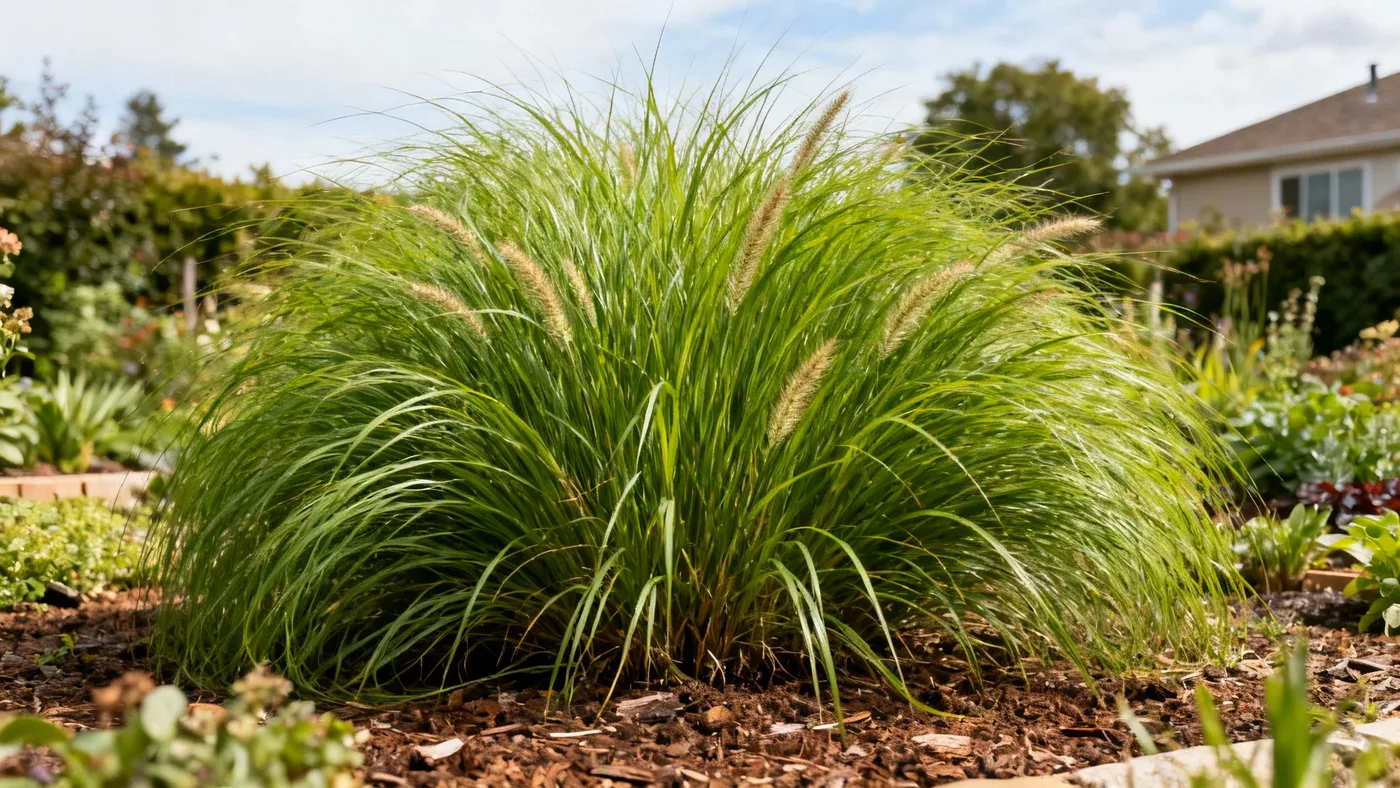
Winter Care for Dwarf Fountain Grass in Cold Climates
Dwarf Fountain Grass thrives in USDA zones 5 through 9, which means it can handle cold winters across much of the country. But "hardy" does not mean "neglect-proof." The difference between a clump that powers through winter and one that dies back is often just a few strategic decisions made in fall and spring. This guide walks you through exactly what your Dwarf Fountain Grass needs to survive and return stronger.
Does Dwarf Fountain Grass Survive Winter?
Yes, Dwarf Fountain Grass (Pennisetum alopecuroides 'Hameln') is a hardy perennial in zones 5 to 9. The crown, where new growth originates, is what needs protection. The above-ground foliage and plumes will die back naturally with the first hard frost, but the root system can handle winter dormancy if you follow a few key steps.
The colder your zone, the more critical your winter strategy becomes. In zone 5, where winter temperatures can drop to minus 20 degrees Fahrenheit or lower, leaving that dried foliage intact over winter is the single most important thing you can do. For context on year-round care, see our complete care guide.
Why You Should Not Prune in Fall
This is the mistake that kills more Dwarf Fountain Grass plants than anything else. Many gardeners see the brown, frost-damaged foliage and assume they should clean it up. Do not do this.
The dried foliage and plumes act as insulation. They protect the crown, where new growth will emerge in spring, from freeze-thaw cycles and ice damage. In zones 5 and 6, this layer of dead foliage can mean the difference between survival and loss.
Leave your Dwarf Fountain Grass standing all winter. It will look weathered and bronze, catching frost and snow beautifully. This is not neglect. This is winter protection. The tan seedheads and persistent foliage provide genuine winter interest while doing the critical work of protecting the plant's heart.
You will prune, but not until late winter or very early spring (February through early March, depending on your zone) when new growth is just beginning to emerge at the base of the clump. At that point, use sharp hedge shears or a mower set high to cut the entire clump back to 2 to 4 inches tall. The plant will flush out fresh green foliage within weeks.
Materials You Will Need
For in-ground protection:
- Sharp hedge shears or hand pruners
- A mower or brush cutter (optional, for larger plantings)
- Mulch, such as pine straw or shredded leaves (optional, for zones 5 and 6)
- Gloves (dried grass edges can be sharp)
For container plants:
- Burlap or frost cloth
- Twine or stakes
- A sheltered location, such as an unheated garage or shed
Overwintering Dwarf Fountain Grass: Step-by-Step
Step 1: Do Nothing in Fall
As temperatures drop and your Dwarf Fountain Grass browns, resist the urge to tidy up. Leave the clump intact through fall and early winter. This typically happens by late October through November, depending on your region. The foliage will turn golden tan to bronze, which is the plant responding naturally to cold.
Step 2: Monitor the Crown in Cold Zones
In zones 5 and 6, you can add an extra layer of insurance. Once the ground freezes solid, spread 2 to 3 inches of loose mulch around the base of the clump, pulling back a few inches from the crown itself so you do not create a damp, rotting environment at the center. Pine straw, shredded leaves, or coarse compost work well. In zones 7 to 9, mulching is optional; the natural mulch of dead foliage is usually sufficient.
Step 3: Protect Containerized Plants
If your Dwarf Fountain Grass is growing in a pot, it needs winter protection in zones 5 to 7. Containerized plants are more exposed to freezing because soil in pots freezes from all sides, not just the top. Nursery-grown plants are typically sold in quart, #1, or #3 containers, and the larger the container, the better it insulates the root system.
Move the pot to a sheltered location (a garage, shed, or against a south-facing wall under an eave) by late fall. Alternatively, wrap the entire pot in burlap or frost cloth secured with twine. Reduce watering significantly; the plant is dormant and will need very little water. Check soil moisture every 4 to 6 weeks, and water only if the soil feels completely dry.
Step 4: Wait for Spring Pruning
This is the hardest step: patience. Your clump may look dead all winter. It is not. By late February or early March, depending on your zone, you will see tiny green shoots emerging at the base of the dried foliage. That is your signal to prune.
Using sharp shears, cut the entire clump back to 2 to 4 inches above the soil line. Make your cuts as close to the new growth as you can without damaging it. Remove all the dead foliage and stems. If you are pruning multiple plants, this is a good time to divide established clumps if needed (every 3 to 4 years is typical).
Step 5: Clear and Refresh
After pruning, rake away any debris from the center of the clump. If you added fall mulch, pull it back slightly so air can circulate around the newly exposed crown. As new growth accelerates in spring, the plant will fill out quickly. Resume regular watering once new foliage appears and temperatures stay above freezing at night.
Container Care and Winter Dormancy
Dwarf Fountain Grass performs well in containers, but winter is the critical period. When planting, refer to our planting guide to ensure proper drainage and initial setup.
In zones 8 to 9, you may leave the pot outdoors if it has drainage holes and is in a sheltered spot. In zones 5 to 7, move it to an unheated garage, shed, or basement that stays between 32 and 45 degrees Fahrenheit. Do not bring the pot indoors to a heated space. Dwarf Fountain Grass needs a dormancy period. Warm, dry indoor conditions can confuse the plant's growth cycle and lead to weak, spindly new growth in spring.
Water sparingly over winter, only if the soil feels completely dry to the touch. The plant is not actively growing and uses almost no water during dormancy.
In spring, move the container back outdoors after the last frost date for your zone. Prune as you would for in-ground plants (cutting back to 2 to 4 inches), then resume regular watering as new growth appears and temperatures warm.
Common Winter Care Mistakes to Avoid
Pruning too early in fall. Cutting back foliage in September or October removes the crown's insulation just when it is needed most. Wait until late winter or very early spring when you see green growth emerging at the base.
Over-mulching or mulching too close to the crown. Piling mulch directly against the crown traps moisture and can cause rot. Keep mulch 2 to 3 inches away from the center of the clump.
Bringing containers indoors to heated rooms. Dwarf Fountain Grass needs cold dormancy. A warm, dry indoor environment bypasses the plant's natural winter rest cycle and can confuse the growth pattern.
Watering dormant plants. Overwatering in winter is one of the fastest ways to kill the crown through rot. Let the plant rest with minimal water.
Assuming the plant is dead. Brown foliage does not mean dead. If the crown is intact and protected, the plant will regrow. In late winter, gently scratch the stem with your fingernail. If you see green or moist tissue inside, the plant is alive and will bounce back after pruning.
Neglecting containers in sheltered locations. Even in a garage, check container soil every 4 to 6 weeks. It can dry out more quickly than outdoor soil, especially in low-humidity environments.
What to Expect After Winter
After pruning in late winter or early spring, new green foliage will emerge within 1 to 2 weeks, depending on your zone and how quickly temperatures warm. The clump will fill out to its mature size (18 to 24 inches wide and 18 to 24 inches tall as a foliage mound, reaching 24 to 30 inches with flower plumes) by mid to late spring.
Blooming typically begins by mid-summer (roughly July onward, varying by region), and creamy tan to buff plumes with pinkish-purple tones when first emerging will persist into fall. This seasonal cycle repeats, year after year, as long as the crown is protected through winter.
Winter Care Quick Reference for Dwarf Fountain Grass
| Task | Timing | Zones 5-6 | Zones 7-9 |
|---|---|---|---|
| Leave foliage standing | Fall (Sept-Oct through Feb) | Required | Required |
| Add mulch around crown | After first hard frost | Recommended (2-3 in) | Optional |
| Move containers to shelter | Before first frost | Required | Optional |
| Reduce container watering | November through February | Very minimal | Very minimal |
| Prune back to 2-4 inches | Late winter (Feb-Mar) | Required | Required |
| Water in-ground plant | Winter dormancy | No watering needed | No watering needed |
| Resume normal care | After pruning and frost risk passes | Resume watering and care schedule | Resume watering and care schedule |