Dwarf Fountain Grass vs Little Bunny: Which Is Right for You?
Fountain grass comes in two popular compact sizes, and the choice between them hinges on one thing: how much vertical space you have. Pennisetum alopecuroides 'Hameln' (Dwarf Fountain Grass) and 'Little Bunny' both deliver the signature feathery plumes and arching habit that make fountain grass a perennial favorite. But their mature sizes, growth trajectories, and best-fit applications differ enough that picking the wrong one wastes a planting spot. This guide walks you through the differences so you can plant with confidence.
Head-to-Head Comparison
| Attribute | Dwarf Fountain Grass (Hameln) | Little Bunny |
|---|---|---|
| Mature Height (foliage clump) | 18-24 in | ~12 in |
| Mature Height (with plumes) | 24-30 in | Slightly taller than foliage, exact height not established |
| Mature Width | 18-24 in | More compact than Dwarf Fountain Grass |
| Time to Full Size | 2-3 seasons | Likely 2-3 seasons (same species growth rate) |
| Bloom Time | Mid to late summer into fall (July-September) | Mid to late summer into fall |
| Plume Color | Creamy tan to buff, pinkish-purple when emerging | Same as species |
| USDA Hardiness Zones | 5-9 | 5-9 (same species hardiness) |
| Drought Tolerance | High (once established) | High (once established) |
| Sun Requirement | Full sun; tolerates light/part shade with fewer blooms | Full sun; tolerates light/part shade |
| Spacing in Mass Planting | 18-24 in apart | Closer spacing possible; typically 12-18 in |
Dwarf Fountain Grass: Best for Substance and Presence
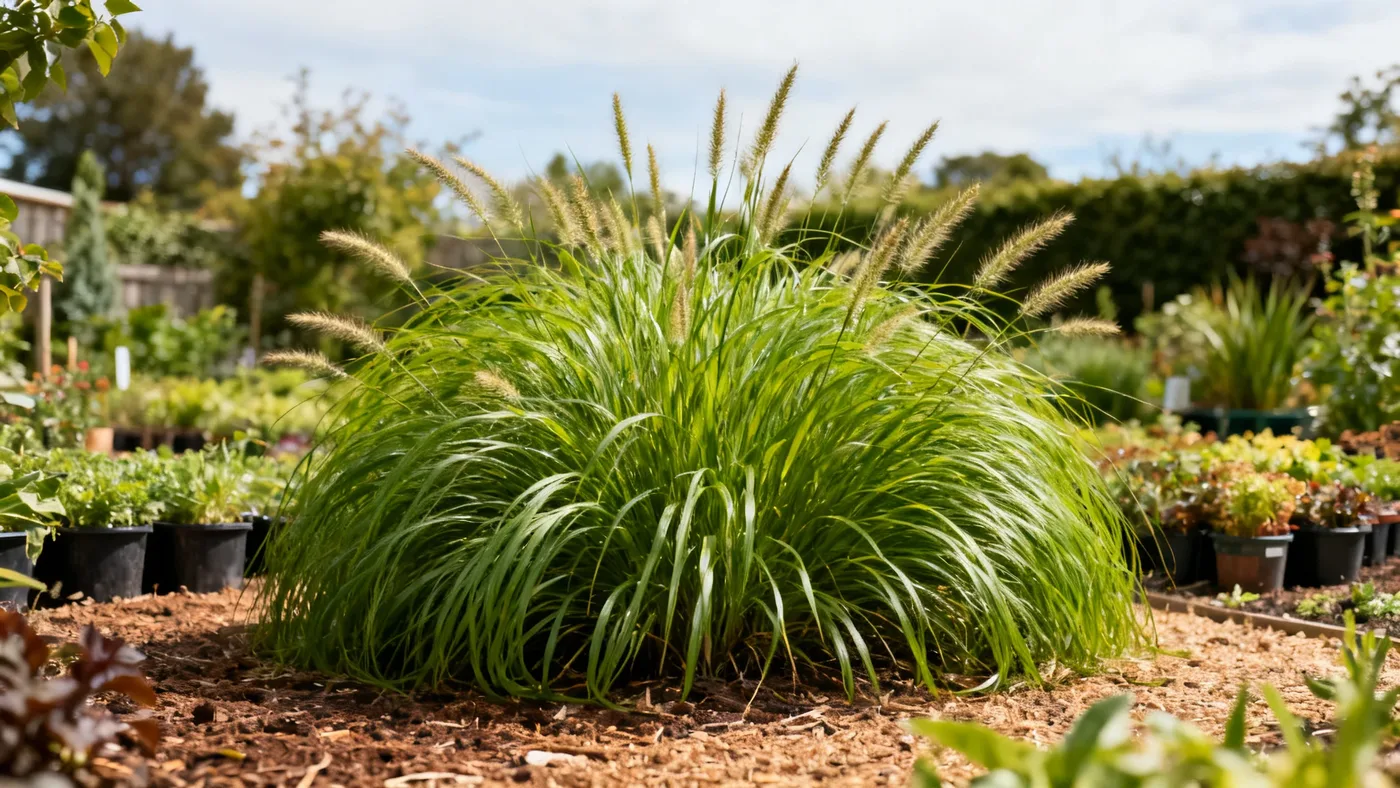
Dwarf Fountain Grass earns its name by being the larger of the two cultivars. At 18 to 24 inches tall (and 24 to 30 inches with flower plumes), it creates a noticeable focal point in perennial beds, rock gardens, and mixed borders. That extra height gives you more visual drama and makes the plant feel like a real anchor, not just a filler.
Pros of Dwarf Fountain Grass
- More impact per plant. The 18 to 24 inch clump reads from farther away and holds its own next to larger perennials. One plant can anchor a small bed section.
- Plume display above surrounding plants. The 24 to 30 inch height with plumes elevates blooms above neighboring foliage, so flowers catch light and stand out.
- Better for mixed borders. Works well planted in front of shrubs or taller perennials without being swallowed by taller companions.
- Container specimen viability. Large enough to look like a solo specimen in a substantial pot without looking sparse.
- Standard spacing recommendations. 18 to 24 inch spacing is widely available guidance, making mass plantings easier to calculate and execute.
Cons of Dwarf Fountain Grass
- Takes up more ground space. The 18 to 24 inch width requires real estate; not ideal for narrow foundation plantings or tight edging roles.
- Requires room to mature. Crowding it (to save space) leads to floppy, open growth and fewer blooms. You need to respect the spacing.
- Slower to fill a small-scale garden. If your goal is a compact, tidy look, the larger mature size may read as oversized.
Little Bunny: Best for Tight Spaces and Layered Effects
Little Bunny tops out around 12 inches tall, making it roughly half the size of Dwarf Fountain Grass. It's a true miniature, bred to deliver all the fountain grass charm in a footprint that fits front-row borders, small containers, rock gardens, and spaces where Dwarf Fountain Grass would dominate. If you've got a tight bed or a design that calls for a more delicate scale, Little Bunny delivers.
Pros of Little Bunny
- Perfect for tight edging and front borders. At 12 inches, it sits naturally in front of perennials without overshadowing them or needing constant management to stay in bounds.
- Compact container plant. Fits easily into smaller pots and works as a solo specimen in quart or #1 containers without looking sparse. Great for patios, balconies, and compact courtyards.
- Denser clump-forming habit. The compact nature often translates to a fuller, tidier appearance without the open, sprawling growth of larger grasses in confined spaces.
- Closer spacing possible. Can be planted 12 to 18 inches apart in mass plantings, reducing the number of plants needed for a given area or creating a faster visual effect with fewer plants.
- Easier to maintain in constrained spaces. No need to fight with sprawl or spacing discipline as rigorously as you would with Dwarf Fountain Grass.
Cons of Little Bunny
- Minimal impact as a solo plant. At 12 inches, one plant is easy to overlook. Needs companions or mass plantings to create visual weight.
- Plumes less visible in mixed plantings. Shorter height means blooms sit closer to the canopy of surrounding plants and may not catch light as dramatically.
- Requires more plants for mass effect. To cover a given area at tighter spacing, you'll need more plants, which increases cost and labor upfront.
- Limited as a specimen. Not suitable for anchoring a bed or standing alone in a high-visibility spot unless you pair it with other plants.
Which Fountain Grass Should You Choose? Use-Case Guide
Choose Dwarf Fountain Grass if you want:
- A perennial that acts as a focal point or garden anchor on its own.
- Visible plume height (24 to 30 inches) that stands above surrounding perennials.
- To plant fewer total plants and still create presence in a mixed border.
- A substantial solo container specimen, especially in 3-gallon or larger pots.
- Strong winter interest: taller tan seedheads that catch snow and backlight.
- A blend of Dwarf Fountain Grass with middle-height companions (Sedum, Rudbeckia, Echinacea) where it bridges visual scale.
- For more details on care, see our complete Dwarf Fountain Grass care guide.
Choose Little Bunny if you want:
- A front-border grass that won't mask nearby plants or create a two-tier effect.
- Edging along pathways, rock gardens, or raised beds where height must stay under 12 inches.
- Multiple plants in compact containers (patio pots, window boxes, balcony planters).
- Lower labor and maintenance: a tidier, more contained habit that needs less fussing.
- A softer, more delicate texture that complements small-scale companion plantings.
- Mass plantings where you can afford tighter spacing (12 to 18 inches) for faster fill.
The Bottom Line
Dwarf Fountain Grass and Little Bunny are two cultivars of the same species, grown for different garden niches. The choice comes down to scale and role. Dwarf Fountain Grass commands attention: it reaches 18 to 24 inches tall and delivers plumes up to 30 inches, making it a workhorse for mixed borders and a natural specimen plant. Little Bunny stays around 12 inches, fitting tight spaces and front rows where taller grasses would overwhelm the design. Both are hardy in zones 5 to 9, both bloom mid-summer into fall, and both tolerate drought once established. The difference is subtraction: Little Bunny is Dwarf Fountain Grass scaled down to fit different garden problems.
If your beds have room and you want one plant to earn its space with visual impact, plant Dwarf Fountain Grass 18 to 24 inches apart. If space is tight, edging is your goal, or you're planting containers on a deck, Little Bunny at 12 to 18 inch spacing solves the problem without compromise.
Quick Reference: Dwarf Fountain Grass vs Little Bunny
| Decision Factor | Dwarf Fountain Grass | Little Bunny |
|---|---|---|
| Best Garden Role | Focal point, mixed border anchor | Front edging, rock garden, container |
| Mature Height Range | 18-24 in (foliage); 24-30 in (with plumes) | ~12 in (foliage); slightly taller with plumes |
| Space Occupied | 18-24 in diameter; needs breathing room | Compact and tidy; tolerates closer spacing |
| Visual Impact | High: stands alone, visible from distance | Moderate: needs companions or mass planting |
| Container Suitability | Yes, #3 or larger pots as specimen | Yes, quart to #1 pots; compact solo plant |
| Planting Density | 18-24 in apart; fewer plants per area | 12-18 in apart; allows denser mass plantings |
| Maintenance Ease | Straightforward if properly spaced; can sprawl if crowded | Very tidy; naturally compact habit |
| Winter Interest | Excellent: tall tan seedheads, strong silhouette | Good: shorter but still decorative when dried |