Is Dwarf Fountain Grass Invasive? The Honest Answer
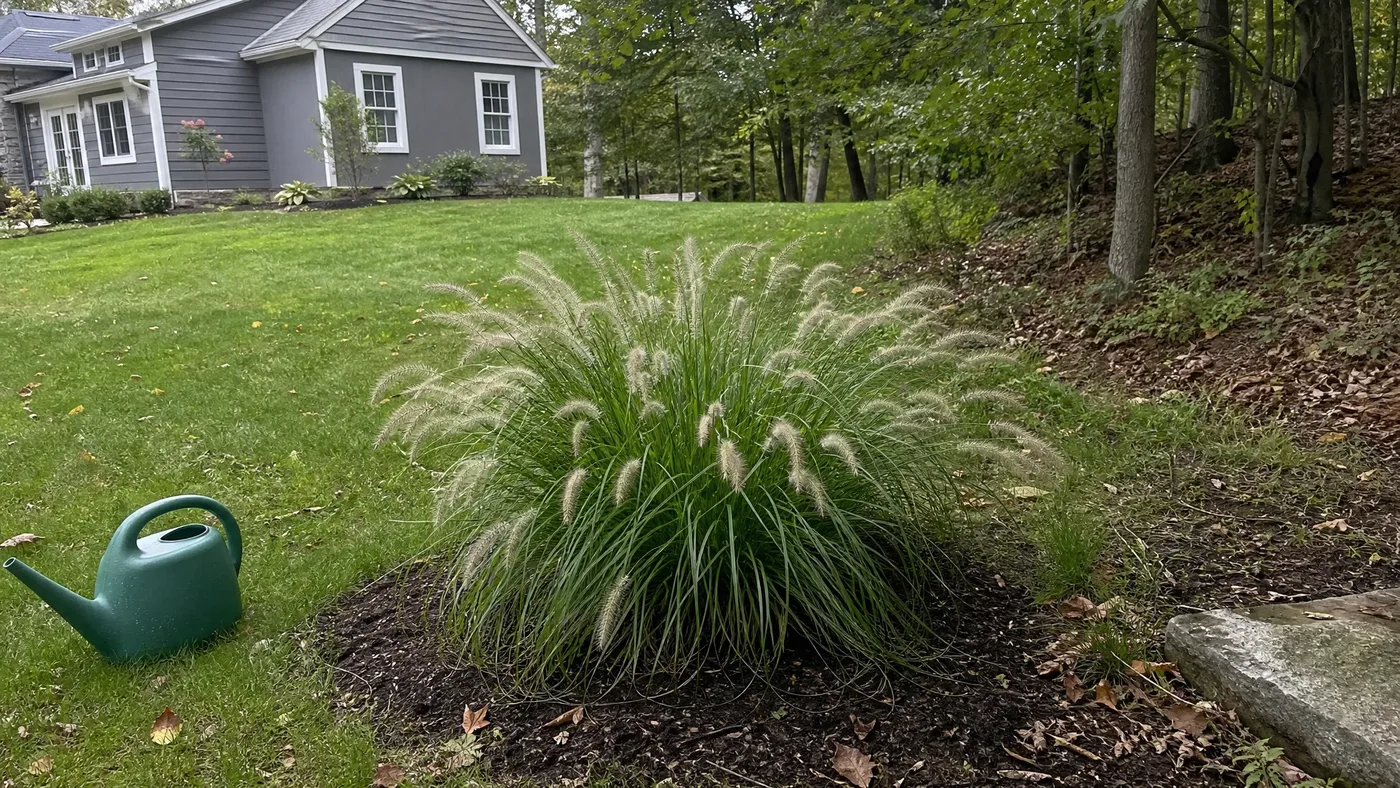
Picture late afternoon, the low sun lighting every plume along a driveway, and a neighbor leaning over the fence to ask, "Doesn't that stuff take over?" It is one of the most common questions we get about this plant, and the worry behind it is fair. Fountain grass has a bad reputation in parts of the country, and the common name gets stuck to several different plants.
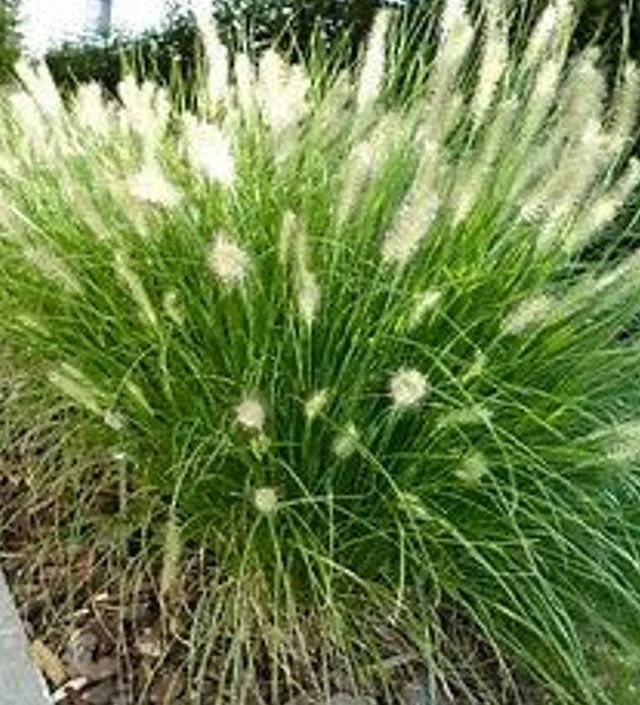
What we see in the beds is a tidy, mounding clump that keeps to its own patch of ground. The trouble is mostly mistaken identity, plus a few stories that drifted loose from the facts.
In this article, we'll go through the beliefs people hold about Dwarf Fountain Grass, from the banned lookalike and self-seeding to weed lists and escapes into the wild, and settle each one against the sources.
The Myth That Every Fountain Grass Is a Weed
Start with the words themselves. "Fountain grass" is a loose label, and gardeners, regulators and nurseries all hang it on different plants. The one with the poor reputation is Pennisetum setaceum, which some references now file as Cenchrus setaceus. The one on your plant tag is Pennisetum alopecuroides 'Hameln', a compact selection of Chinese fountain grass, a species native to Asia and Australia.
That is the whole misunderstanding in two sentences. Judging every fountain grass by the worst one is like judging every rose by the thorniest bramble in the hedgerow.
Why the Warnings Exist
The warnings are real, and we do not wave them away. Where P. setaceum is invasive, the University of Florida plant directory says it displaces native and endangered plants and increases fire frequency and intensity. Anyone who reads that and then sees "fountain grass" on a tag is right to pause.
But those warnings were written about one species. They describe what happens in the places where that plant has taken hold, not what a clump of Hameln does in a border.
How We Will Test Each Belief
Below, we take the six ideas we hear most, one at a time, and hold each against extension and university sources. Where the sources agree, we say so plainly. Where they disagree, we tell you that too, because a reader deciding what to plant deserves the whole picture.
Our position, stated up front: Hameln earns its place in a garden bed. A careful gardener still checks the local rules, and we will show you how.
Is Dwarf Fountain Grass the Same Plant as the Banned One?
No. They are different species with different habits, and the cultivar name is the quickest way to tell them apart. Hameln belongs to P. alopecuroides. The plant on regulators' lists belongs to P. setaceum. They share a common name and a general look of arching leaves topped with soft plumes, and that is about where the sameness ends.
The table sets out what the sources say about each.
| Trait | Dwarf Fountain Grass 'Hameln' | Pennisetum setaceum |
|---|---|---|
| Species | P. alopecuroides | P. setaceum |
| Weed status in our sources | Not named as a noxious weed | State-listed noxious weed in Hawaii and Nevada, Category II in Florida |
| Reseeding | Unlike the species, this cultivar does not re-seed itself | Displaces native plants where it is invasive |
| Size | 2 to 3 feet tall and wide | Not the question here |
| Hardiness | USDA zones 5 through 8 | Not the question here |
Read the Tag, Not the Nickname
What we tell customers is to buy by botanical name. A tag that says Pennisetum alopecuroides 'Hameln' tells you exactly what you are getting. A tag that says only "fountain grass" tells you almost nothing, and we would pass on it.
The Hameln name matters for another reason too. It marks a selection chosen for its small, neat habit, which is why it sits at 2 to 3 feet instead of sprawling. If you want to compare it with its look-alikes, our cultivar comparison lays out how they differ.
Does Dwarf Fountain Grass Seed Itself Everywhere?
Self-seeding is the heart of the worry, so this is where we are most careful. The clearest statement we have says plainly that this cultivar does not re-seed itself, in contrast to the species. That is a direct statement about Hameln, not a general remark about fountain grasses.
The University of Washington's horticulture library, in its review of ornamental grasses and reseeding, notes that the species is not classified as invasive but is still a spreader by self-sowing. That fits the picture neatly: the species seeds, and the cultivar is the one said not to.
Where the Sources Disagree
You will find one dissenting note. NC State's plant database describes Hameln as "compact with dark green foliage" and says it "can self-seed aggressively". On the same page, 'Moudry' is called a prolific self-seeder, which is a very different tone from the cultivars the other sources treat as quiet.
Our reading is that one line in a cultivar list, with no detail behind it, does not outweigh a direct extension statement. But we will not pretend the line is not there. In our rows, we rarely find stray seedlings around Hameln, and we treat any that appear as something to pull, not something to panic about.
If a Seedling Does Show Up
Pull it while it is small. A young seedling comes out of moist soil easily, and a few minutes in autumn saves any later bother. Look at the base of the clump and along the edge of the bed, where fallen plume seed would land first.
If you want extra insurance, you can remove the plumes before they break apart. The trade-off is losing the winter show, since the clump turns bronze in fall and, per Kansas State, remains fairly intact for the winter. Our cutting-back guide covers timing, and you can decide how much winter plume you want to keep.
Showy Plumes Don't Make Dwarf Fountain Grass Pushy
There is an instinct that anything this showy must be pushy. Plumes that glow when the light hits them look like a plant spending its energy to take over. In practice, the display tells you about flowering, not spreading. Hameln flowers in summer and fall, and Kansas State calls it a very compact, heavy-blooming fountain grass. Heavy blooming and compact growth are listed together, which is a good clue to the plant's manners.
How the Clump Actually Grows
The species grows in clumps 2 to 4 feet tall and wide, and the cultivar is the smaller version at 2 to 3 feet. It forms a mound and stays a mound. The growth rate is listed as medium for the species, so you will not see a plant sprinting outward across the lawn.
That is why spacing is a design decision and not a containment strategy. If you give each plant the room it will fill, the clump simply knits into its neighbors without crowding them. Our spacing guide gives distances for borders and mass plantings.
What the Plumes Are Doing
Think of the plumes as the plant's lighting rig. They stand above the foliage, catch low sun from behind and turn it into a soft halo, then fade to bronze as the season cools. All of that is show, and none of it needs the plant to move anywhere.
The one honest link between plumes and spread is seed. Plumes are where seed forms, so the question comes back to the previous section: a cultivar reported not to re-seed can have as many plumes as it likes.
What State Weed Lists Actually Name
People often tell us fountain grass is banned. The more accurate version is that one fountain grass is banned in some places. The sources we rely on name Pennisetum setaceum, a state-listed noxious weed in Hawaii and Nevada. In Florida, its behavior in the southern part of the state has earned it a Category II ranking from the Florida Invasive Species Council.
None of those entries is for Hameln. Where the sources talk about P. alopecuroides, the tone is gentler: the Washington library says plainly that the species is not classified as invasive.
Reading a List Properly
We cannot see every state and county list, and rules change. So we give the same short routine to anyone who is unsure:
- Search the full botanical name, Pennisetum alopecuroides 'Hameln', not "fountain grass".
- Check under both Pennisetum and Cenchrus, since references have moved some of these grasses between the two genera.
- Look at whether an entry names the species, the cultivar or just the genus, and read the notes.
- Call your state or county extension service if anything is unclear, and ask for their current guidance.
If you garden somewhere hot and dry, our drought and heat guide covers how the plant behaves there. Remember too that the cultivar is hardy in zones 5 through 8, so check yours before planting.
Rumors of Dwarf Fountain Grass Escaping Into Wild Meadows
Escape stories are the most vivid ones, and some are true, just not about this plant. Chinese fountain grass, the species, can spread rapidly by seeds carried by wind or by attaching to clothes or fur, and it has escaped gardens and become problematic in some areas of the country. That is a description of the species, and it is worth taking seriously.
The step people skip is the next one: the cultivar was selected for a different habit. Sources that address Hameln directly say it does not re-seed itself. A wild-meadow escape needs seed, and seed is exactly the thing the cultivar is said to lack.
Where Caution Still Applies
We would not call the risk zero, and we do not think any honest grower would. The warning about aggressive self-seeding is a reason to stay alert, not a reason to plant carelessly. A few habits cover it:
- Plant Hameln by name and keep the tag, so you always know which grass you have.
- Keep fertile fall-blooming selections such as 'Moudry' away from beds that border natural areas, since it is a prolific self-seeder.
- If your property meets a meadow, woodland edge or stream, ask your extension office whether the species is a concern locally before you plant.
- Set the clump in a defined bed, where stray seedlings are easy to spot and pull.
A defined bed also looks better. Our landscaping ideas show how to frame the clumps so the plumes read as a deliberate feature.
A Clear Conscience for Dwarf Fountain Grass Beds
Put the findings side by side and the verdict is calm. The invasive fountain grass on the weed lists is a different species. Dwarf Fountain Grass is a compact cultivar that stays at 2 to 3 feet, grows as a clump, and is reported not to re-seed. One database note disagrees, so buy by name, pull the odd seedling and check your local list. That is the whole job.
Dwarf Fountain Grass
Nursery-grown Dwarf Fountain Grass in sizes from Quart Plant, shipped to your door.
From $49.49
Shop Now →We grow Hameln Dwarf Fountain Grass on our own farms, and the clumps we tend stay tidy and well behaved, which is just what this guide's verdict calls for. We are a small business of growers who raise every plant we sell, and we only offer top-quality ornamental grasses. If you'd like a clump you can plant without a second thought, start with one of ours.