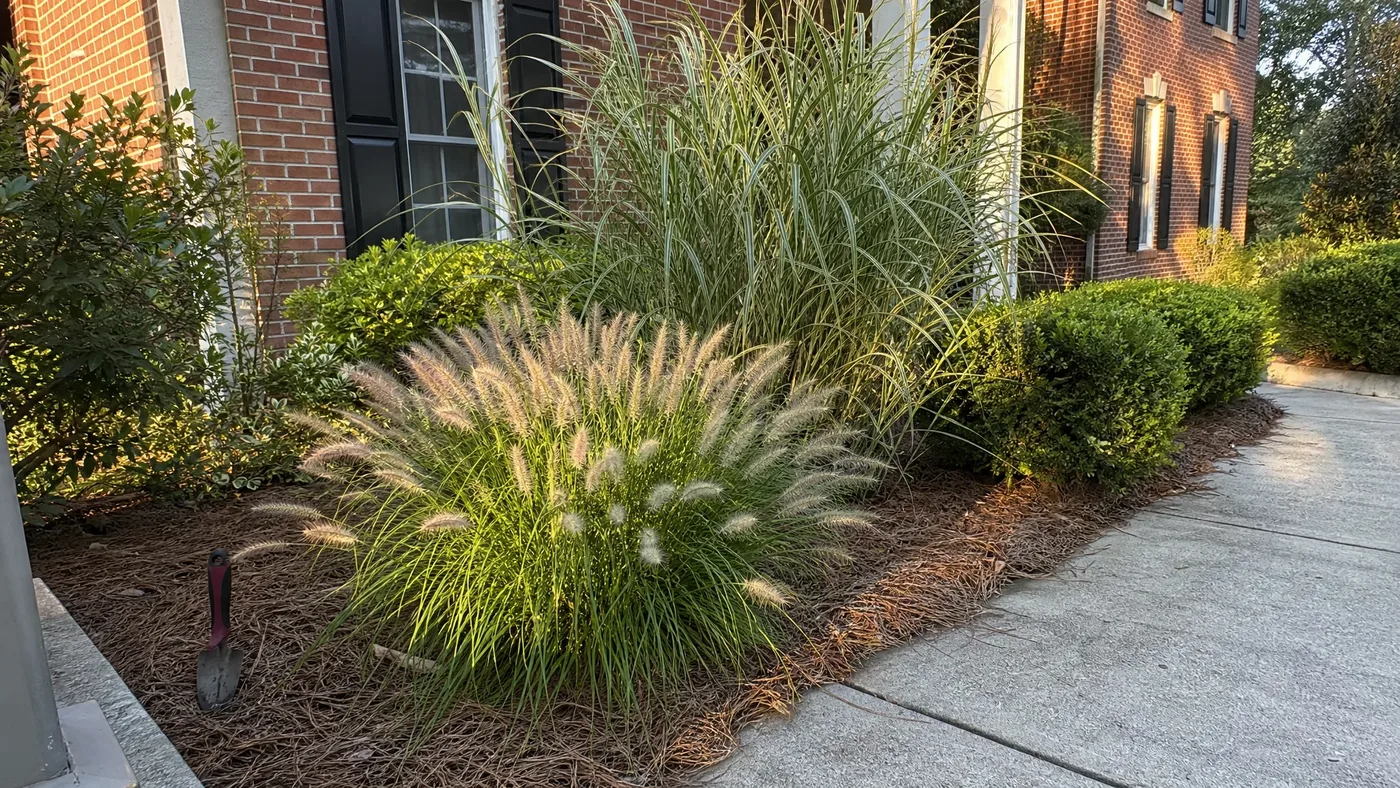
Dwarf Fountain Grass vs Other Ornamental Grasses Compared
One autumn in our rows, a line of tall grasses beside the fence leaned over after the first hard rains and stayed down for the rest of the season. One small mound of Hameln at the end of the row stood upright, plumes catching the low sun, as if nothing had happened. We have thought about that row every time a customer asks whether the little grass can hold its own against the big names.
It can, but only in some gardens, and we would rather say so plainly than sell you a grass that does not fit. Pick too big and you fight it every March. Pick right and you get a tidy mound that asks for almost nothing.
We'll walk you through size, winter hardiness, soil, yearly upkeep and plumes, setting Dwarf Fountain Grass against maiden grass, Karl Foerster feather reed grass, muhly, pampas and foxtail grass, then give you a verdict by garden type.
How Much Room Dwarf Fountain Grass Takes Beside Maiden Grass
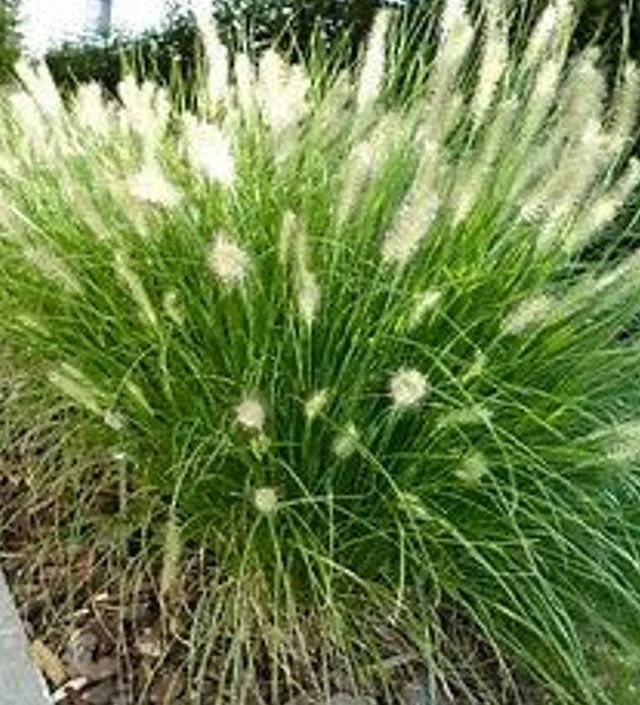
Hameln settles at 2 to 3 feet tall and 2 to 3 feet wide, and that footprint is most of its argument. The species can stretch to 4 feet in both directions, so this cultivar is the compact end of the family. It is a mound you can set beside a walkway and forget, and it will not crowd the plant next to it.
Maiden grass (Miscanthus) plays a different game. Its clumps generally climb well above Hameln and spread wide enough to claim a corner of their own, so read the tag on the specific plant before you trust the genus name. Sizes vary a good deal from one Miscanthus cultivar to the next, and we will not quote a number we cannot source.
Against Maiden Grass and Feather Reed Grass
Karl Foerster feather reed grass is the narrow one. It sends up a tight, upright clump that takes little width but stands well above Hameln, which makes it a back-of-the-border grass. Hameln does the opposite. It is clump-forming with arching linear leaves, so it spills into a fountain and softens the edge of a bed. A stiff vertical behind a loose mound is a pairing we like.
Verdict: if the space is a 3-foot patch at the front of a bed, Hameln wins and it is not close. If you want height or a screen, maiden grass or feather reed grass does a job Hameln never will, so plant them for that job.
Against Muhly, Pampas and Foxtail
Pink muhly is the one rival that truly matches Hameln for size, at 2–3 feet by 2–3 feet, and Missouri State calls it a warm-season, bunch-type grass. If your decision is only about footprint, those two are a tie, and the choice moves to the other criteria below.
Pampas grass is another story. Its foliage alone runs 3–4 feet, and its flowering stems reach 4–7 feet. Missouri State also notes it can be invasive in the southern and western U.S. Hameln, unlike its species, does not reseed itself.
One of the most common questions we get is whether Hameln is the same as foxtail grass. Its plumes are bottlebrush-like, so the confusion is fair. The name is used loosely, though, so check the botanical name on the tag before you compare sizes.
Dwarf Fountain Grass in Cold Winters Against Tougher Grasses
Hameln is rated for USDA zones 5 through 8, which is narrower than the 6a through 9b that NC State lists for the species. That gap matters, because plenty of listings quote the species range for the cultivar. In zone 5 you are at the cold edge, so a spring planting with a full season to root is the safer start. Our hardiness zones guide covers the edges in detail.
Where Hameln Is the Safe Bet
Across zones 6 through 8, Hameln is a comfortable perennial. It is a warm-season grass, so it wakes late in spring and does not rush into growth during a warm spell in March. Its foliage turns bronze and stays fairly intact through winter, which means it keeps its shape in the cold months rather than collapsing into a mat. That standing clump also shelters its own crown, a small bonus that taller, floppier grasses do not give.
Where We Would Pick Something Else
For colder gardens, we point people to Karl Foerster feather reed grass. It is a cool-season grass that starts growing early and is widely grown in places where fountain grass is marginal. Many maiden grass cultivars are also hardy in cold regions, but they differ by cultivar, so ask your local extension service about the one you are considering.
Pink muhly and pampas lean the other way. Both do their best in warmer regions, and pampas is better avoided where it can turn invasive. If you live in zone 4 or colder, none of the compact grasses here is a sure thing.
Verdict: Karl Foerster feather reed grass wins for the coldest gardens. Hameln wins for the broad middle of zones 5 through 8, where it gives you the smallest footprint of the reliable options.
What Each Grass Asks of Your Soil
NC State says the species prefers dry to moist, well-drained soil in full sun, and the Florida extension lists Hameln's tolerances as acidic to slightly alkaline. No source we checked gives a numeric pH for it. In practice that means ordinary garden loam works without testing.
Once established, the species is drought-tolerant and slightly salt-tolerant, which makes Hameln a fair choice for a sunny strip near a driveway or road. Our soil guide goes deeper on amendments.
Wet Feet and Heavy Clay
The word that matters in that NC State line is "well-drained." Hameln forgives dry spells far better than it forgives a bed that sits soggy after rain. In a low corner with heavy clay, the crown stays wet and the clump suffers. Maiden grass generally tolerates damper ground better, and if you have a spot that stays moist, that is where we would put it.
Dry, Lean and Sandy Ground
Pink muhly is a strong choice for dry, sandy beds, and it sits happily beside Hameln there because both want sun and sharp drainage. Feather reed grass is more at home in average to moist soil, so it can look stressed where Hameln is thriving. Pampas grass is tough, but its size and invasive streak outweigh any soil advantage for most home gardens.
Verdict: for the typical dry-to-average garden bed, Hameln forgives the most. It only falters when the ground stays wet. For a truly damp site, choose maiden grass and spare yourself the rot.
Yearly Upkeep for Dwarf Fountain Grass and Its Rivals
Hameln's yearly job is one cut. Dead foliage and old flowered stems come off in spring, and because the clump stays fairly intact over winter, you do that in late winter or early spring before new growth shows. Cut it close to the ground, rake out the straw and you are finished until next year. Our cutback guide has the timing for your zone.
In our rows, March is when Hameln looks its worst and is easiest to fix. A pale heap of straw becomes a clean stub in minutes. The Florida extension says this cultivar does not reseed, so you will not be pulling seedlings in May. It also lists no pests or diseases of major concern, so there is little else to chase through the summer.
How the Rivals Compare in March
The table below sets out what each grass looks like in early spring and what it asks of you. We kept it qualitative, since cutting heights and dates vary by cultivar and region.
| Grass | What March looks like | Yearly workload |
|---|---|---|
| Dwarf Fountain Grass (Hameln) | Pale, intact mound | One cut, small clump, no seedlings |
| Maiden grass | Large, dense, dry clump | Heavy cut, tough division |
| Karl Foerster feather reed grass | Greens up early | Cut before new growth gets going |
| Pink muhly | Fine, wispy tufts | One light cut |
| Pampas grass | Very large clump | Biggest job of the group |
Verdict: Hameln is the lightest workload of the group. Division is needed only if the center of the clump thins, and a clump this size splits with a spade rather than an axe. Maiden grass and pampas turn spring into an afternoon of real labor.
Dwarf Fountain Grass Plumes in August Light Against Feather Reed Grass
By August, Hameln's bottlebrush plumes are in full show. The spikes appear from mid-summer into fall, and Florida lists the cultivar as flowering in summer and fall. K-State calls it a very compact, heavy-blooming fountain grass, which matches what we see: plumes in generous numbers on a small clump. Our bloom guide covers the timeline.
Plume Shape and Timing
Karl Foerster feather reed grass blooms earlier and holds a narrow, upright plume that looks like a stiff column. Hameln's plumes are soft and bottlebrush-shaped, so they sway rather than stand. Pink muhly waits until fall for its airy, hazy bloom, while pampas grass puts up large plumes on stems that tower over everything. Foxtail types are loosely defined, so look at the actual plant.
If you want plumes in a narrow space, feather reed grass delivers a vertical line. If you want a bloom that lasts from August into the cold months and moves in the wind, Hameln is the better pick.
Fall and Winter Color
K-State says Hameln changes to a bronze color in the fall and remains fairly intact through winter. That means the clump keeps giving color after the plumes fade. Feather reed grass fades to a pale straw, while pink muhly peaks in fall and then goes quiet.
Verdict: for a long season of soft plumes and bronze fall color in a small space, Hameln wins. For a narrow, early, upright accent, feather reed grass does the job better.
Choosing Dwarf Fountain Grass for a Small Border
Put the criteria together and the picture is simple. Hameln is the pick for a small, sunny garden where you want a mound, soft plumes and one cut a year. We grow Hameln on our own farms, so it is a plant we know well. The full picture of day-to-day care sits in our care guide, so we will not repeat it here.
Small borders and front edges: Hameln, without hesitation. It stays at 2–3 feet, arches over the edge and needs little. Back of a big border or a screen: maiden grass or feather reed grass, because Hameln will never reach that height. Cold gardens: Karl Foerster feather reed grass. Wet or heavy soil: maiden grass.
Warm, dry, sandy beds: pink muhly alongside Hameln, since they match in size and both like sun and drainage. Pampas grass: we would pass, given its size and invasive reputation in the southern and western U.S. Foxtail grass: check the botanical name on the tag before comparing.
The Dwarf Fountain Grass You Will Still Love in Ten Autumns
Hameln will not tower over a fence or screen a neighbor's window, and it was never meant to. It is a compact, arching, heavy-blooming clump that asks for sun, drainage and one cut each spring. The right grass is the one you will still enjoy in the tenth autumn, when the plumes catch the low light, the leaves have turned bronze and the clump is standing upright long after the taller grasses have given up.
Dwarf Fountain Grass
Nursery-grown Dwarf Fountain Grass in sizes from Quart Plant, shipped to your door.
From $49.49
Shop Now →Out on our farms, Dwarf Fountain Grass sits in bright, open sun with soil that sheds water fast, and we let each clump stand through winter until new shoots push up. We grow and sell top-quality ornamental grasses from those same farms, so we know how this one stacks up against the others in your comparison. If it has won you over, start with one of ours.