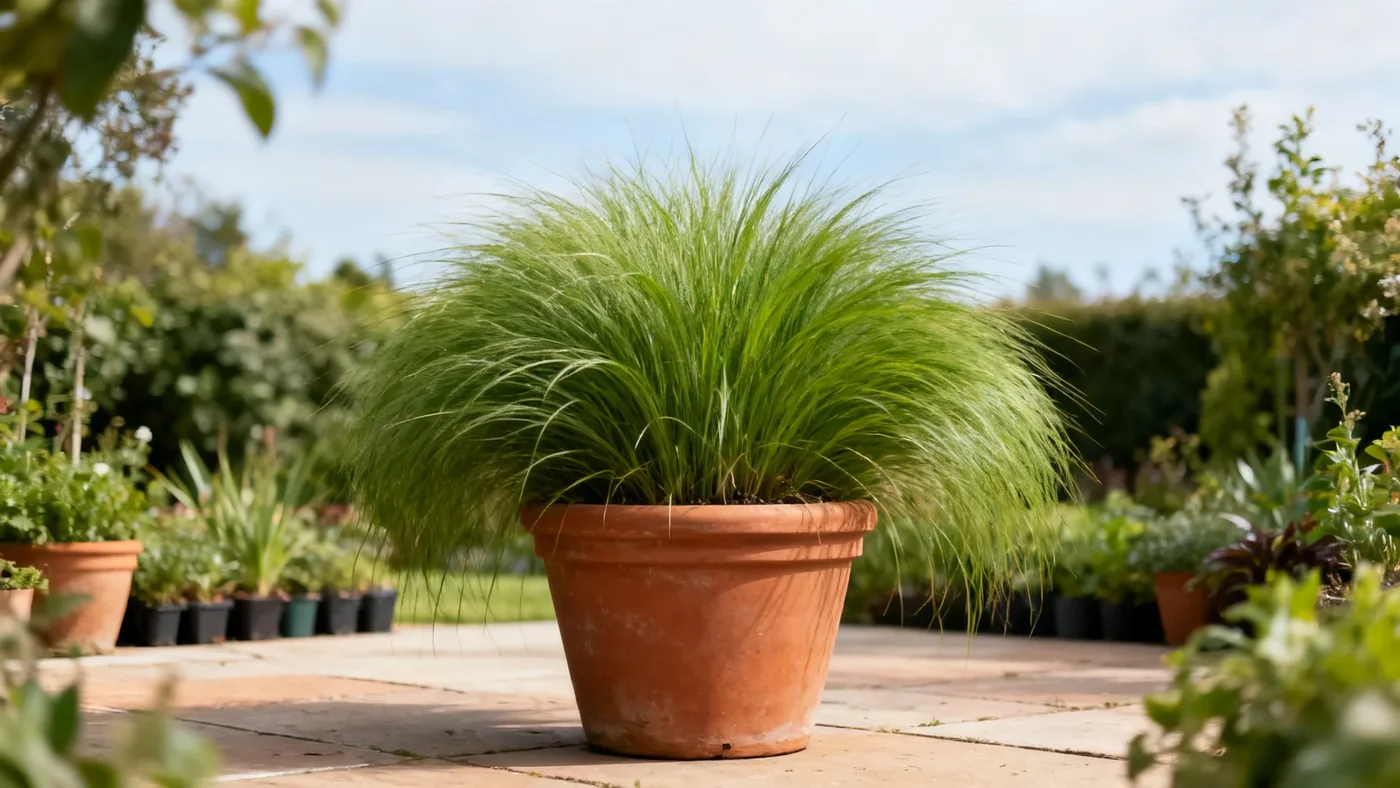
Growing Dwarf Fountain Grass in Pots and Containers
Dwarf Fountain Grass thrives in containers. If you have a patio, balcony, or a spot on your porch where you want seasonal color and movement, this is one of the easiest ornamental grasses to grow in a pot. Unlike many container plants that demand constant attention, Dwarf Fountain Grass tolerates a range of conditions once established and rewards you with graceful plumes from mid-summer through fall.
This guide walks you through everything you need to know to get a container-grown Dwarf Fountain Grass established and blooming.
Why Grow Dwarf Fountain Grass in Containers
Containers offer flexibility. You can move your grass to follow the sun, group it with other perennials and sedums, or position it exactly where you want seasonal interest. Dwarf Fountain Grass is compact enough for containers: the clump grows to 18-24 inches wide and tall, or 24-30 inches including the flower plumes. That size makes it ideal for patios, entry gardens, and mixed container displays without overwhelming the space.
Containers also let you control the soil and water conditions precisely. This matters most in regions with heavy clay or poorly drained native soil. If you live in USDA zones 5-9, you can grow Dwarf Fountain Grass in a pot, though gardeners in colder zones will need to move the container indoors or into an unheated garage over winter.
Materials and Ingredients You Will Need
- A container: 12-18 inches in diameter minimum (a 5-gallon or #5 nursery pot size works well). The pot must have drainage holes in the bottom.
- Well-drained potting mix: a quality container soil blended for perennials or ornamental grasses, not garden soil. Garden soil compacts in containers and holds too much moisture.
- Nursery-grown Dwarf Fountain Grass plant: typically sold in quart or #1 containers from spring through early summer.
- A balanced slow-release fertilizer: optional but helpful, applied once in spring.
- Water source: a hose or watering can with a steady flow.
- Mulch (optional): a thin layer of compost or bark around the plant to retain moisture and regulate soil temperature.
- Winter protection materials (for zones 5-8): burlap or an unheated garage space if you choose to overwinter the container outdoors.
Step-by-Step Instructions
Step 1: Choose Your Container and Location
Select a pot with drainage holes that measures 12-18 inches across the top. Wider pots are better than tall pots because Dwarf Fountain Grass spreads outward as it grows. Place the pot where it will receive full sun. Full sun means at least 6 hours of direct sunlight daily. If your location gets only light or partial shade, the plant will bloom less reliably and may develop a floppier habit. This is a sun-loving plant, so positioning is key.
Step 2: Fill the Container with Well-Drained Potting Mix
Use a high-quality, well-drained potting mix designed for containers. Fill the pot about two-thirds full, leaving enough room at the top for the root ball and a final watering depth. Do not use garden soil or topsoil. Container soil must drain freely to prevent crown rot, which is the most common problem with ornamental grasses in pots. If your potting mix feels heavy or clay-like when you squeeze a handful, add some extra perlite or coarse sand to lighten it.
Step 3: Prepare and Position the Plant
Water your nursery-grown plant thoroughly before planting. Gently remove it from its container and loosen the root ball by hand. This encourages roots to spread into the surrounding potting mix. Place the plant in the center of your container so the top of the root ball is level with or just slightly below the rim of the pot. Backfill around the sides with potting mix, pressing gently to eliminate air pockets. Do not bury the crown of the plant deeper than it was originally growing.
Step 4: Water Thoroughly and Add Mulch
Water the pot deeply until water drains from the bottom. This settles the soil and helps roots make contact with the potting mix. If the soil settles more than half an inch below the pot rim, add a bit more potting mix and water again. A thin layer of mulch around the base of the plant (but not touching the stem) can help retain moisture, though it is not required. Mulch moderates soil temperature swings, which is especially helpful during the plant's first season.
Step 5: Establish a Watering Schedule
During the first growing season, water regularly to keep the potting mix consistently moist but not soggy. Once Dwarf Fountain Grass is established (after one full season), it becomes drought tolerant. In the second and third years, you can water less frequently. Containers dry out faster than in-ground plantings, so check the soil moisture before watering. If the top inch of potting mix feels dry to the touch, water. In hot summer weather, daily watering may be necessary. In cooler weather or after rain, skip a day or two.
Step 6: Fertilize Once in Spring (Optional)
Dwarf Fountain Grass is a light feeder. A single application of balanced slow-release fertilizer in spring is generally sufficient. Over-fertilizing causes soft, floppy growth that looks less attractive and may flop over in the wind. Follow the package instructions and apply to moist soil only.
Step 7: Prune in Late Winter or Very Early Spring
Cut the entire clump back to 2-4 inches above the soil surface in late winter or very early spring, before new growth emerges. Do not prune in fall. The dried foliage protects the crown through winter and provides winter interest. Use sharp hedge shears or pruners, and work carefully around the plant to avoid cutting yourself on the fine blades. After pruning, you may remove the old growth by hand. New shoots will emerge in spring and reach full height and bloom size within one growing season.
Tips for Success
- Sunlight is non-negotiable. Dwarf Fountain Grass in shade blooms poorly and flops. Six hours minimum of direct sun produces reliable flowering.
- Monitor drainage in the first month. After watering, check that water flows freely from the drainage holes. If it pools inside the pot or drains very slowly, your potting mix may be too heavy. Mix in perlite next season.
- Let the plant establish before dividing. Dwarf Fountain Grass reaches full mature clump size in 2-3 seasons, gaining roughly 6-12 inches of spread and height per year while establishing. Wait until year 3 or 4 before dividing, and only if the center of the clump dies out.
- Anticipate winter needs. In zones 5-9, plan ahead for winter. In zones 5-8, move the container to an unheated garage or sheltered location, or wrap it with burlap to insulate the root zone. Water sparingly over winter, just enough to keep the roots from completely drying out. Zones 8-9 may tolerate outdoor overwinter if you protect the pot from excessive wet.
- The plant is safe around pets. Dwarf Fountain Grass is not known to be toxic to dogs, cats, or other pets, though the sharp seed awns can cause minor mechanical irritation if chewed.
Common Mistakes to Avoid
- Poor drainage. Using garden soil or potting mix without enough perlite leads to soggy roots and crown rot. Invest in a quality, well-drained potting mix.
- Inadequate sunlight. A container in part shade will grow foliage but produce few or weak flower plumes. Reposition the pot if blooms are sparse.
- Overwatering established plants. Once the grass is 2 or more years old, reduce watering frequency. Soggy soil in a container is worse than slightly dry soil.
- Over-fertilizing. Excess fertilizer produces soft, weak stems that require staking. One light application in spring is enough.
- Forgetting winter protection in cold zones. An unprotected container in zone 5 may freeze solid, killing the roots. Plan to move or insulate containers before the first hard freeze.
- Pruning too late in spring. If you prune after new growth has emerged, you will cut off fresh shoots and delay flowering. Prune in late winter, before green shoots appear.
What to Expect
If you follow these steps, your Dwarf Fountain Grass should establish quickly. Plants purchased in spring will often produce flower plumes by mid to late summer (roughly July-September), though the first year's blooms may be lighter than subsequent years. The foliage will be fine-textured and arching, creating a fountain-shaped mound. In fall, the plumes and foliage will turn golden tan to bronze, extending the visual interest through autumn.
By the second season, the clump will have widened and deepened, and you can expect reliably abundant, creamy-tan bottlebrush-like plumes. Winter interest persists if you leave the dried foliage uncut until late winter. When snow or frost clings to the seedheads, the effect is striking.
For more detailed care information beyond the growing season, read our complete Dwarf Fountain Grass care guide.
Quick Reference: Container Growing Checklist
| Task | Timing | Details |
|---|---|---|
| Purchase plant and containers | Spring, after last frost | Quart or #1 size; 12-18 in. diameter pot minimum |
| Plant in container | Spring | Use well-drained potting mix, full sun location |
| Water regularly | First season: frequent; Year 2+: as needed | Keep moist first year, then only when top inch is dry |
| Fertilize (optional) | Early spring | One application of balanced slow-release only |
| Expect blooms | Mid to late summer into fall | First year lighter, Year 2+ abundant plumes |
| Prune | Late winter or very early spring | Cut clump back to 2-4 inches before new growth |
| Winter protection (zones 5-8) | Before first freeze | Move to unheated garage or wrap container with burlap |
| Division (if needed) | Early spring, year 3+ | Only if center of clump dies out |