Is Dwarf Fountain Grass a Perennial or an Annual?
Read the word "annual" on a plant tag and it makes a plain promise: this plant will grow, flower, set seed and finish within one season. Apply that promise to Hameln and you end up acting on it in October, pulling out a healthy clump. Or you shrug at a bare patch in April and replant something else. Either way, the plant pays for a label it never earned.
Below, you'll find out all about how Dwarf Fountain Grass lives through a full year, including what the clump looks like in each season, why some look-alike grasses really do behave as annuals, and how to tell a resting crown from a dead one. We hold the word "annual" up against the calendar and see whether it fits.
What Perennial and Annual Really Mean
Three terms cover almost every plant life cycle. An annual completes its whole life, from seed to flower to seed again, in a single growing season, and then the plant dies. A biennial takes two seasons: it builds leaves in the first year, flowers in the second, and then dies. A perennial lives for many years.
The part that confuses people is that a perennial does not have to stay green. Many perennials, ornamental grasses included, lose their top growth every cold season and keep living below it. Think of a cabin shut up for winter. The shutters are closed and nobody is in sight, yet the building and the deed are untouched. The crown, the dense base where roots meet stems, is the cabin.
So the useful question is not whether the leaves die but whether the crown does. NC State Extension lists Hameln's life cycle as perennial, and its page on the species calls it a clumping herbaceous perennial. The rest of this guide checks that label against what the plant does, one season at a time.
Dwarf Fountain Grass in Early Spring Regrowth
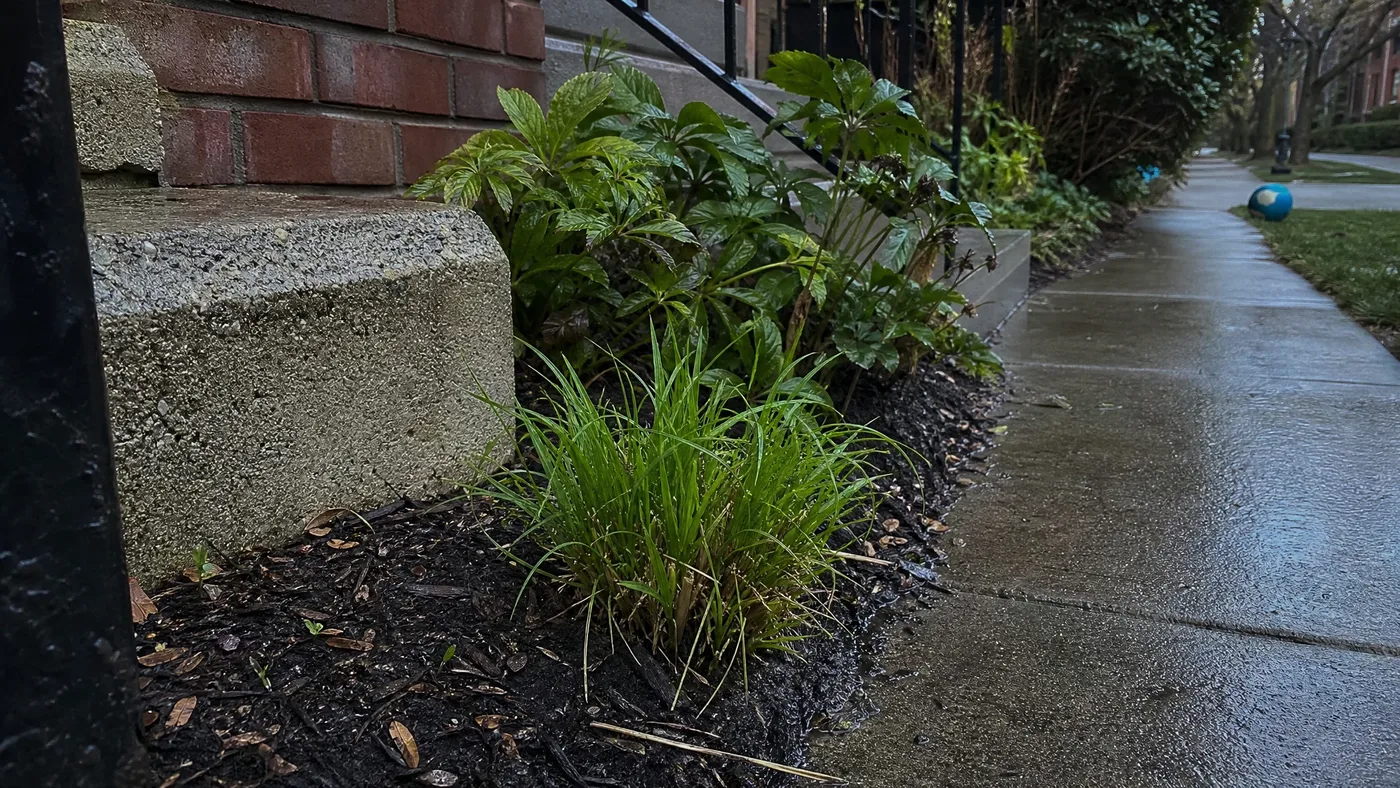
March to April is when the question first gets answered. The clump is a tuft of last year's tan blades, or a stubby stump if you have already trimmed it, because the standard advice is to cut the foliage to the ground in late winter. That describes a plant that replaces everything above ground each year.
The First Green Shoots
New growth rises from the center of the crown as fine, pointed green blades. They push up through the old stubble, so for a few weeks you can see old and new side by side, which is the plainest proof of a perennial you will get. Our guide to when and how to cut back Dwarf Fountain Grass covers the timing and the cut itself.
This is a warm-season grass, so it wakes later than the cool-season plants around it. In colder zones, a clump may look bare well into the month while neighboring perennials are already green.
Why You Should Wait Before Replacing It
One of the most common questions we get in April is whether a clump with no green showing has died. Our answer is to wait for the soil to warm before deciding anything. Press gently at the base: a living crown feels firm and the old stems hold fast.
Replacing a slow clump in early April usually means replacing a living plant. For the usual spring warm-up in your area, check with your local extension service.
Late Spring Fills Out the Dwarf Fountain Grass Mound
May to June is when the case for "perennial" becomes easy to see from across the yard. The crown that sent up a few shoots in April now builds the dense, arching mound this cultivar is known for. K-State calls Hameln a very compact, heavy-blooming fountain grass, and the compact part shows here as the clump thickens rather than sprawls.
None of this needs replanting. The cultivar reaches 2 to 3 feet tall and 2 to 3 feet wide, a little smaller than the species at 2 to 4 feet, and it gets there by adding growth to roots it already has. The species grows at a medium rate, so expect a steady build over several seasons rather than a sprint.
Each Year Starts Bigger Than the Last
An annual begins every spring as a seed or a small plug and must grow the entire plant again. A perennial clump resumes from an established crown, so year two and year three tend to bring a fuller mound than year one. A plant bought this spring will not look like a three-year-old clump, and that gap is the difference between starting a plant and continuing one.
Full sun fills the mound best, meaning six or more hours of direct light for the species. Thin, floppy growth in June usually points to too little sun, not to a plant on its way out.
Summer Plumes on a Dwarf Fountain Grass Crown
July to August brings the plumes, and this is where newer growers get nervous. In an annual, flowering is the last act, because the whole season has been building toward seed. In a perennial grass, the same display is the seasonal peak. The University of Florida lists the cultivar as summer flowering and fall flowering, and the species' bottlebrush-like spikes show up in mid-summer to fall.
A Peak, Not an Ending
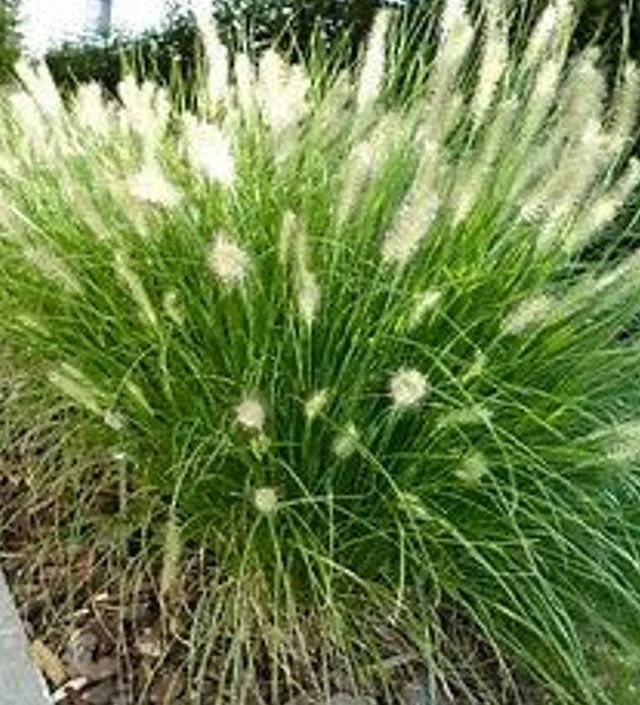
Hameln's plumes are purple-tinged, bristly spikelets in late summer. They sit on a clump that is still green and still producing blades from the crown. That overlap is the sign to watch for: a plant near the end of its life stops making leaves, and this one keeps going. Our guide to Dwarf Fountain Grass blooms covers how long the show lasts.
Why Seed Is Not the Plan
An annual survives through its seed. Hameln does not lean on that at all, since, unlike the species, this cultivar does not re-seed itself. The crown carries the plant forward instead.
It also means you should not expect volunteer seedlings next year. If a seed packet logic of "flower, seed, done" is stuck in your head, drop it here.
Why Some Fountain Grasses Die at Frost
The confusion is real, and it starts at the garden center. Purple fountain grass, Pennisetum setaceum 'Rubrum', is sold in the same aisle as Hameln, often in a similar pot. It is hardy in zones 9 through 11, and it is grown as a perennial in most of Florida but is an annual in cooler climates.
Annual Is a Gardener's Label Here
Purple fountain grass is not an annual by nature. It is a tender plant that a winter outside its zone kills, so gardeners treat it as an annual and buy a new one each spring. The word describes what happens in your yard, not what the plant is built to do. Customers usually ask us about this after a purple-leaved grass from a six-pack died in their first November, and they wonder whether Hameln will do the same.
Where Hameln Draws the Line
It will not, within its range. Hameln is a different species, Pennisetum alopecuroides, and the cultivar is hardy in USDA zones 5 through 8. Inside that band it is a perennial for the long haul.
Outside it, check with your local extension service before you count on it. Our Dwarf Fountain Grass hardiness zones guide goes through the cold end and the warm end in more detail.
Autumn Color and Fading Foliage in Dwarf Fountain Grass
September to November is when the clump starts to look tired, and the right reading is that it is retiring on schedule. The blades shift from green toward bronze while the plumes stay put. K-State notes that the foliage changes to a bronze color in the fall and remains fairly intact for the winter. A failing plant collapses. This one holds its shape.
Color Is a Signal, Not a Symptom
The color change tells you the plant is closing down above ground for the cold season. Our guide to why Dwarf Fountain Grass turns golden bronze explains what shapes the shade. The browning is gradual, and the crown below is where next year's growth is already waiting.
Leave It Standing
What we tell customers is to leave the clump up through autumn and winter. Common advice says to tidy everything in fall, but for this grass we would wait until late winter. Cutting it down in October leaves a bare stump that looks like a casualty, and it removes the bronze foliage and plumes that carry the garden through the cold months.
Winter Dormancy Is Not Death for Dwarf Fountain Grass
December to February is when the cabin is shut. Above ground, the clump is dry, tan to bronze and rattling in the wind, which looks like an ending if you only know annuals. Below, the crown sits intact in cold soil. The plant is dormant, which means resting, and a hardy perennial in zones 5 through 8 is built to do this every year.
Dormant or Dead: How to Tell
The checks are simple and mostly wait for spring. Here is how a resting crown compares with a dead one.
| What you check | Dormant | Dead |
|---|---|---|
| Base of the clump | Firm, with old stems holding tight | Soft, mushy or hollow, and stems pull loose |
| Foliage | Dry, tan to bronze, still holding its shape | Flattened into a wet, dark heap |
| Spring behavior | Green shoots appear once the soil warms | Nothing at all well after the soil has warmed |
Judge in spring, never in January. In our rows, the clumps that look roughest in midwinter are often the ones that push the strongest shoots in April.
Winter Wet Is the Real Risk
Cold alone seldom troubles a hardy clump inside its zone range. Trouble tends to start where the ground stays saturated, since the species prefers dry to moist, well-drained soils. If your yard stays soggy, fix the drainage rather than the plant. Our winter care guide for Dwarf Fountain Grass in cold climates covers the colder end of the range.
Which Word Describes Your Clump?
Run the calendar once and the answer is clear. Green shoots from the same crown in March and April, a fuller mound in May and June, plumes in July and August, bronze foliage through autumn and a resting crown in winter make one repeating cycle, not a life that ends. An annual would be finished by cold and would depend on seed, and Hameln is a perennial that comes back from its crown.
Dwarf Fountain Grass
Nursery-grown Dwarf Fountain Grass in sizes from Quart Plant, shipped to your door.
From $49.49
Shop Now →On our farms, Dwarf Fountain Grass gets full sun, fast-draining soil and a single spring feeding, and every year the same crowns send up fresh green shoots. We grow and sell top-quality grasses from our own farms, so we have watched that perennial return many times over. If you're ready to enjoy a clump that comes back each spring, start with one of ours.