Dwarf Fountain Grass Varieties: Comparing Popular Cultivars
If you've decided on fountain grass for your garden, you've taken a smart step toward low-maintenance beauty. But you still have choices. Dwarf fountain grass varieties range in height, color, and growing speed. Comparing them now means the difference between a perfect fit for your space and a plant that outgrows your border in two seasons.
The good news: all popular fountain grass cultivars share the same hardy temperament and landscape versatility. The differences matter most if you have specific constraints: a small container, a preference for dark seedheads, or a tighter hardiness zone.
Quick Comparison Table: Dwarf Fountain Grass Varieties
| Cultivar | Species | Mature Height (foliage) | Height with Plumes | Zones | Bloom Color | Best For |
|---|---|---|---|---|---|---|
| Hameln | Pennisetum alopecuroides | 18-24 in | 24-30 in | 5-9 | Creamy tan, pinkish-purple emerging | Borders, mass plantings, most climates |
| Little Bunny | Pennisetum alopecuroides | ~12 in | ~18 in | 5-9 | Creamy tan, pinkish-purple emerging | Containers, edging, small spaces |
| Moudry | Pennisetum alopecuroides | Variable* | Variable* | 5-9 | Dark purple-black seedheads | Dramatic contrast, mixed borders |
| Karley Rose | Pennisetum orientale | Variable* | Variable* | 6-9 | Intense pink plumes | Specimen accent, warmer zones |
*Exact mature sizes vary; check with your nursery or local extension service before planting.
Pennisetum Hameln vs. Little Bunny: The Core Decision
If you're comparing dwarf fountain grass varieties, you're probably weighing Hameln against Little Bunny. These are the two most common cultivars, and for good reason: both are cold-hardy to zone 5, reliable bloomers, and adaptable to average soil.
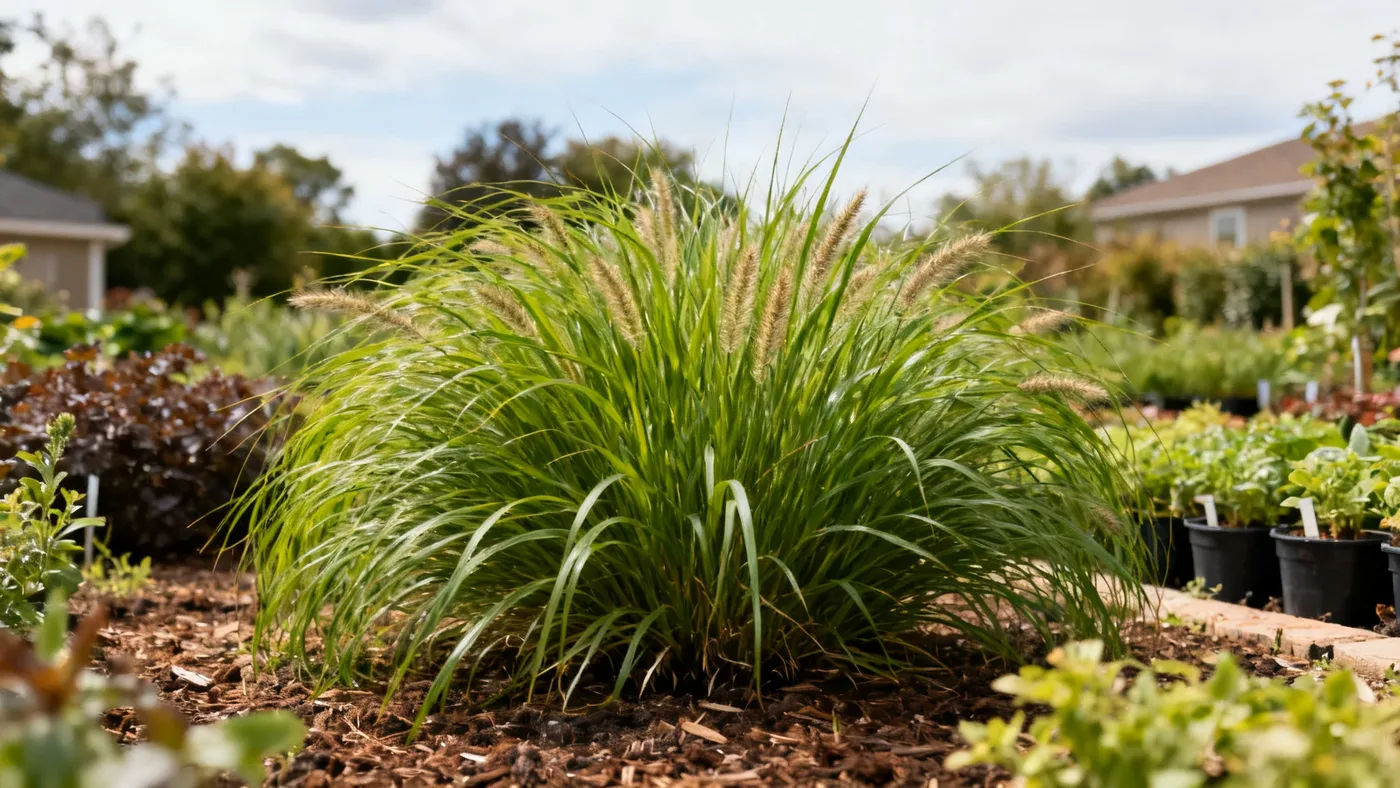
Hameln reaches 18-24 inches in foliage height and 24-30 inches with flower plumes. It spreads 18-24 inches wide when mature, typically in 2-3 growing seasons. This size makes it ideal for border plantings and mixed perennial beds where you want a substantial mounding form without overwhelming the space.
Little Bunny lives up to its name: a more compact cultivar that peaks at roughly 12 inches in height. With plumes, expect closer to 18 inches. The same fine-textured, arching foliage appears on both cultivars, but Bunny's tighter mound means it fits into containers, front-of-border edging, and small urban gardens where Hameln might overwhelm the design.
Both prefer full sun and bloom from mid to late summer into fall, typically July through September depending on your region. Both display creamy tan seedheads with pinkish-purple tones as plumes first emerge. The real difference lies in scale and how quickly each fills its allotted space.
Moudry: The Dark Cultivar
If a traditional tan or pink plume feels too subtle for your scheme, Moudry fountain grass offers a striking alternative. This cultivar produces dark purple-black seedheads that stand out dramatically in late-season borders, especially against silver-foliaged companions like Russian sage or artemisia.
Exact mature dimensions for Moudry vary by growing conditions and region; ask your nursery for local grown-plant heights. The dark plumes arrive on the same summer-to-fall schedule as other Pennisetum alopecuroides cultivars (July-September), and hardiness covers zones 5-9.
Moudry works best as an accent or focal point rather than a mass planting. The black seedheads draw the eye, so strategic placement (mid-border or grouped in odd numbers of three or five) creates impact without clutter.
Karley Rose: A Different Species
Before you plant Karley Rose thinking it's just a pink version of Hameln, note that it is a different species entirely: Pennisetum orientale rather than Pennisetum alopecuroides. This distinction matters for hardiness and growing conditions.
Karley Rose plumes emerge intense pink and fade to buff as they age, providing a longer season of color interest. However, cold hardiness dips to zone 6 compared to Hameln's zone 5, making it a less reliable choice in northern climates. If you garden in zones 6-9, it can shine as a specimen accent. In colder zones, plan for additional winter protection or treat it as an annual.
Exact mature size information for Karley Rose is limited; check with regional nurseries or your extension service for expected performance in your specific area.
Piglet: A Lesser-Known Option
Piglet is occasionally listed as a dwarf fountain grass cultivar, though detailed specifications are harder to find than for Hameln or Little Bunny. If you encounter it at a specialty nursery, ask the grower about mature height, zone hardiness, and whether it performs reliably in your region before committing to planting space.
Pros and Cons by Cultivar
Hameln
Pros: Widely available, proven performer in zones 5-9, moderate height suits most borders, elegant form with fine foliage, good winter interest, deer resistant.
Cons: Larger than Little Bunny, so requires more space; can look floppy in deep shade or with over-fertilizing; may self-seed in warmer climates (check local invasive listings before planting).
Little Bunny
Pros: Compact size perfect for containers and small spaces, same hardiness as Hameln (zones 5-9), excellent edging plant, less vigorous spread means less frequent division needed.
Cons: Smaller presence in large-scale landscapes, slightly less common at nurseries than Hameln, limited availability at some regional growers.
Moudry
Pros: Dramatic dark seedheads offer unique color, same hardiness as other alopecuroides cultivars (zones 5-9), works as a specimen focal point.
Cons: Exact size specs harder to predict; best used sparingly rather than en masse, less widely available than Hameln or Little Bunny.
Karley Rose
Pros: Intense pink plumes offer color not found in standard Pennisetum alopecuroides, different species brings botanical interest.
Cons: Narrower hardiness range (zone 6-9) limits cold-climate use, may require winter protection or replanting in zone 6, less cold-hardy than Hameln, size and performance vary by region.
Best Fountain Grass Cultivars for Specific Uses
Best for Small Containers
Little Bunny. Its 12-inch mature height and 18-inch plume height fit comfortably in 14 to 18-inch pots. Use well-drained potting soil and place in full sun. In zones 5-7, move containers to an unheated garage or shelter for winter; in zones 8-9, most plants survive outside with mulch protection around the container base.
Best for Mass Plantings and Borders
Hameln. Space plants 18-24 inches apart in drifts of three, five, or more. The 24-30 inch plume height reads clearly from a distance without towering over other perennials. Pairs well with sedums, coneflowers, and black-eyed Susans.
Best for Dramatic Fall Contrast
Moudry. Use one to three plants as a focal point in a mixed border to punctuate late-season color schemes. Dark plumes create striking silhouettes against sunset light.
Best for Warmer Climates (Zones 6-9)
Karley Rose if you want pink plumes; Hameln or Little Bunny if you prefer proven cold hardiness and wider zone range. Zones 8-9 gardeners can experiment with Karley Rose as a specimen without winter-protection concerns.
Best for Low-Maintenance Edging
Little Bunny. Edge a perennial bed or line a pathway. The tidy mound does not flop into pathways, and its restrained growth means less frequent division (every 3-4 years versus annual thinning).
What Makes a Fountain Grass Variety Best
The best types of fountain grass cultivars are the ones that fit your hardiness zone, your available space, and your visual preference. Hameln dominates because it succeeds nearly everywhere in zones 5-9, reaches a practical size for most gardens, and costs less than specialty cultivars. Little Bunny wins for anyone with space constraints. Moudry appeals to gardeners who want a showstopper seedhead color. Karley Rose rewards zone 6-9 gardeners who prioritize pink plumes over cold hardiness.
All dwarf fountain grass varieties are drought-tolerant once established, bloom reliably mid-summer through fall, and require only one spring cutback (to 2-4 inches) each year. None demands rich soil. All resist deer and most common pests. These shared strengths mean your choice comes down to size, color preference, and zone certainty.
Checking Local Invasive Guidelines
Before finalizing your selection, check your state or local invasive plant list. The species Pennisetum alopecuroides is flagged as invasive or on watch lists in parts of the mid-Atlantic and southeastern US. The cultivars Hameln and Little Bunny produce markedly less viable seed than the wild species and are not fully sterile, so some regions still advise caution. A quick call to your local extension office will clarify whether your area recommends these cultivars or suggests alternatives instead.
For more detailed growing guidance after you've chosen your variety, see our complete care guide to Dwarf Fountain Grass.
Quick Reference: Cultivar Selection Checklist
| Your Situation | Choose This Cultivar |
|---|---|
| Zone 5 or colder, want proven hardiness | Hameln or Little Bunny |
| Container growing or edging | Little Bunny |
| Large border or mass planting | Hameln |
| Want dark purple-black seedheads | Moudry |
| Zone 6-9, prefer pink plumes | Karley Rose (with winter protection in zone 6) |
| Uncertain on exact specs, want safest bet | Hameln (most widely available, best documented) |
| State/local invasive concerns | Check extension office before planting |