Types of Fountain Grass: Where Dwarf Fountain Grass Fits In
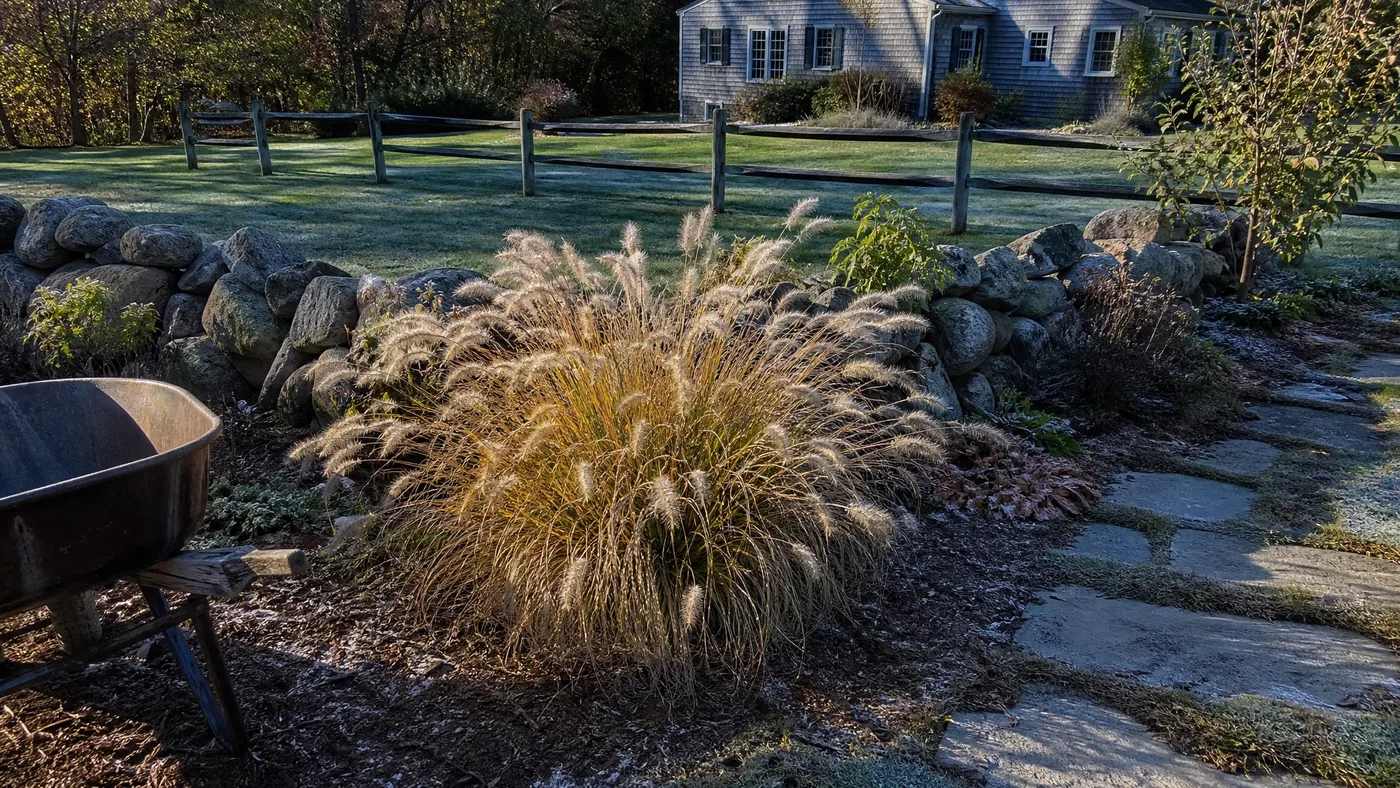
Picture your garden bed from an upstairs window on the morning after the first hard frost. Most of it has gone limp and brown. One grass is still standing in a tidy bronze mound, and the purple one you bought in May has slumped into a dark heap.
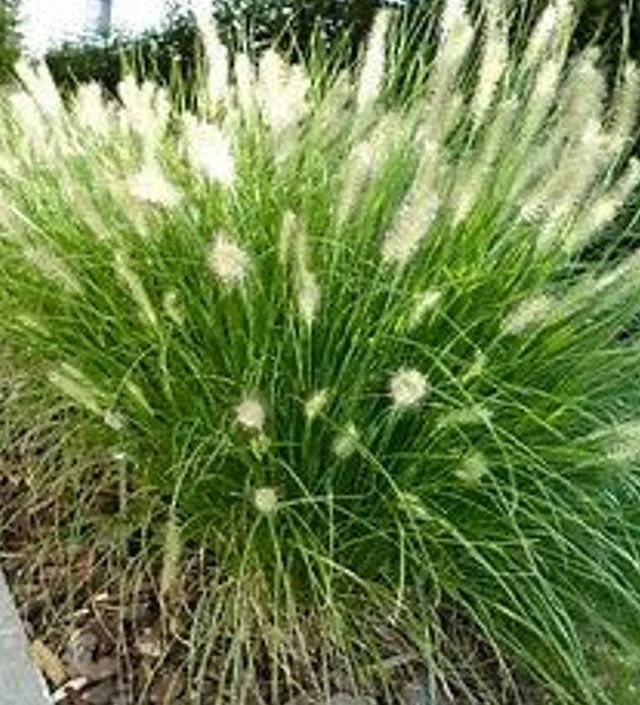
That difference is not luck. "Fountain grass" is a loose label for several plants with different origins, and the wrong pick means paying for an annual you expected to be a perennial. The right pick returns every spring and keeps its plumes standing well into winter.
Read on for how the genus splits into hardy and tender camps, why the tender purple types fail in cold soil, where Dwarf Fountain Grass sits among the hardy forms, how to read a plant tag, and what the crown below ground does all winter.
Why Fountain Grasses Split Into Hardy and Tender Camps
Fountain grass is a common name, not a single plant. It covers several species with the same bottlebrush plumes and very different winter behavior, and the split comes down to where each one evolved. Each plant carries a built-in answer to one question: what happens when the soil gets cold?
How Origin Decides Winter Survival
A species from a place with real winters keeps a crown (the dense base where shoots meet roots) that can sit through freezing weather and restart in spring. A tropical species has had little reason to develop that ability. When cold arrives, its leaves die first, and the crown has nothing in reserve to carry the plant through.
Dormancy is the working part of the arrangement. It is a rest period in which top growth stops and the plant lives off what it stored during the season. Hardy grasses slide into it as the soil cools and wake as it warms. Tender ones stay tied to warmth, which is the cause behind everything in the next section.
Who Belongs in Which Camp
The hardy camp is Pennisetum alopecuroides, which is native to Asia and Australia. Dwarf Fountain Grass 'Hameln' and Little Bunny belong here, and so do the orientale types such as Karley Rose. The tender camp includes purple fountain grass and ornamental millet, both covered below.
The table lines up the three plants you are most likely to meet, using the figures extension sources give.
| Plant | Winter behavior | Height |
|---|---|---|
| Dwarf Fountain Grass 'Hameln' | Perennial in USDA zones 5–8 | 2–3 feet |
| Purple fountain grass | Perennial only in zones 9–11 | 3–4 feet |
| Ornamental millet | Annual everywhere | 2–5 feet |
A Naming Wrinkle
One naming change will save you confusion at the nursery. The University of Wisconsin extension notes that the genus Pennisetum has been reclassified to Cenchrus, though not all references have adopted the change. A tag may carry either name, and both point to the same group of plants. We use Pennisetum here because many labels still do.
How Tender Purple Types Behave in Cold Soil
Purple fountain grass (Pennisetum setaceum, filed by many references under Cenchrus setaceus) is hardy only in USDA zones 9a through 11b. A zone number is shorthand for how cold winters usually get, so a plant rated 9 to 11 was never built for a hard freeze. Across zones 5 through 8 it behaves as an annual: handsome from planting day until frost, then done.
What Happens Below Ground
The leaves are the visible casualty, but the soil does much of the damage. Water fills the tiny air spaces between soil particles, so cold, wet soil holds little oxygen while chilled roots take up water slowly. Roots need oxygen to work, and they get less of it exactly when the plant can least afford the loss.
A tropical grass in that soil has roots that barely function and a crown surrounded by moisture, which is the setup for rot. Heavy clay holds water longer than sandy loam, so the same plant may fare differently in two beds of one yard. The sources we rely on give no exact temperature at which a given plant quits, so if you are borderline, ask your local extension service.
Why Overwintering Is a Gamble
You will see advice to dig purple fountain grass and winter it indoors. A pot you can move into shelter does keep the roots out of cold, wet ground, which is the one variable you control. We would still not count on it, because indoor light and warmth rarely match what a tropical grass wants.
One of the most common questions we get in fall is why a purple grass that looked perfect all summer did not come back. Nothing went wrong. It was an annual in that zone from day one, and the cheapest approach is to buy it that way.
A Caution for Mild Climates
Purple fountain grass is weedy, spreading readily by seed, and invasive in some southern west coast states. If you garden in zone 9 or warmer, check local guidance before planting it. Hameln, by contrast, does not re-seed, a trait we return to in the next section.
Where Dwarf Fountain Grass Sits Among Hardy Forms
Inside the hardy camp, the species forms clumps 2 to 4 feet tall and wide. Dwarf Fountain Grass 'Hameln' is the compact end of that range. The University of Florida lists it at 2 to 3 feet tall and wide and hardy in USDA zones 5 through 8. The species is listed for zones 6 through 9, and we use the cultivar's 5 through 8 for Hameln. Our hardiness zone guide goes deeper on the cold edge.
Why Hameln Is Our Baseline
Hameln earns the baseline spot for a few reasons. It is a very compact, heavy-blooming fountain grass that grows in full sun. It flowers in both summer and fall, and it tolerates acidic to slightly alkaline soils. It also has no pests or diseases of major concern, so the plant asks little of you once it is in the ground.
Little Bunny sits in the same hardy group and is smaller still. If you are choosing between those two, our Hameln versus Little Bunny comparison settles it by site.
The Trait the Species Lacks
The cultivar differs from its species in one useful way. The species re-seeds, and the University of Florida states that this cultivar does not. The clump stays where you planted it instead of sending seedlings into the neighbors. In a mixed border, that single trait is why we point gardeners to Hameln before any other fountain grass.
What Sets Dwarf Fountain Grass Apart From Karley Rose
Karley Rose is sold as an orientale type, a separate group from the alopecuroides forms, and the two should not be assumed to share numbers. Hameln's figures are 2 to 3 feet tall and wide, bronze fall color, and heavy summer-to-fall bloom. Karley Rose and other specialty cultivars carry their own height and bloom details on their own tags. Treat Hameln's numbers as the yardstick and measure everything else against them.
Reading a Specialty Cultivar Against Hameln
We are cautious about stating sizes the extension sources do not give, so use this method instead. Find the mature height and width on the tag, then compare each to Hameln's 2 to 3 feet. If the tag number is larger, plan more spacing and give the plant a backdrop role.
If it is similar, the plants are interchangeable on size, and the choice comes down to plume color and form. Our cultivar comparison lays out the hardy siblings in detail.
Why Compact Habit Matters in a Bed
A grass that matures at 2 to 3 feet fits the front or middle of a border without hiding what sits behind it. Larger clumps need more room and can crowd neighbors as they fill out. Heavy bloom on a small mound is the reason we call Hameln a baseline, since it gives you the full fountain effect without the footprint.
Ornamental Millet Is a Different Job
Ornamental millet is a different kind of plant altogether. Wisconsin extension calls it an annual warm-season grass that grows 2 to 5 feet tall, tropical in origin, and slow until the weather warms. Its purple cultivars need full sun to develop deep color. Millet suits a summer container or a seasonal accent, but it will not anchor a permanent border the way a perennial Hameln will.
Reading a Dwarf Fountain Grass Plant Label Before You Buy
A pot of fountain grass in a nursery row can look very similar from three feet away, and hardy and tender types are sometimes sold near each other. The label tells them apart in seconds if you know where to look. Start with the botanical name rather than the common name, because "fountain grass" alone can mean any plant in this guide.
Customers usually ask us whether the zone on the tag is a promise. It is a guide to the cold the plant tolerates, not a guarantee, which is why the species name matters more.
Label Checklist
Run through these points before you carry the pot anywhere.
- The botanical name should read Pennisetum alopecuroides or Cenchrus alopecuroides, followed by 'Hameln' in single quotes for the cultivar.
- If the name says setaceum or setaceus, you are holding purple fountain grass, which is perennial only in zones 9 through 11.
- If it says glaucum or americanus, it is ornamental millet, an annual.
- Mature height and width should read about 2 to 3 feet for a true Hameln.
- The sun note should say full sun, which Hameln wants.
Names That Mislead
The word "purple" is the usual trap. It can describe purple fountain grass, which is tender, or a purple-leaved ornamental millet, which is an annual, so a tag that says only "purple fountain grass" is not enough. Look for the species name before you trust the color. "Dwarf" on a tag also does not prove the plant is Hameln, since several hardy cultivars are compact.
If a label gives no botanical name, ask for one. A grower who knows the plant can read it off the supplier tag in a moment. If pot size is also on your mind, our buying guide on pot size covers what to pick once you have the right plant.
The Crown and Roots of Dwarf Fountain Grass Up Close
Everything above ground in a Hameln comes from the crown, the compact base at soil level where roots end and shoots begin. Because this cultivar clumps and does not re-seed, every new blade pushes up from that one base. That is why the plant holds a neat mound of 2 to 3 feet rather than wandering.
How a Clump Grows
A clumping grass adds growth at the edge of its existing crown, so the footprint widens slowly and stays put. The species grows at a medium pace. Kansas State lists Hameln as a warm-season grass, meaning it grows when the soil warms and rests when it cools, so expect green-up in late spring rather than early. A slow start in April is the plant's normal schedule, not a problem.
Why the Crown Wants Drainage
The species prefers dry to moist, well-drained soil, and the reason is the same one that undoes purple fountain grass. A crown sitting in cold, saturated ground gets little oxygen and invites rot, while a crown in drained soil can sit out winter dry. Set the crown level with the surrounding soil, not sunk below it, so water drains away from the base instead of pooling there.
The roots also make the species drought-tolerant once established. We have no sourced root-depth figure, so we will not invent one.
Let the Old Foliage Do Its Job
In fall, Kansas State notes that Hameln changes to a bronze color in the fall and remains fairly intact for the winter. That standing foliage likely helps shield the crown from winter wet and wind, so leave it until late winter. Our winter care guide covers the timing.
One Clump, One Clear Choice
If you live in zones 5 through 8 and want a grass that returns every year in a tidy mound, choose Dwarf Fountain Grass 'Hameln'. If you have a tight spot, look at Little Bunny. If you want height and drama and accept replanting, purple fountain grass or ornamental millet is fine as an annual, and in zone 9 or warmer purple can stay a perennial, though it may seed freely.
Dwarf Fountain Grass
Nursery-grown Dwarf Fountain Grass in sizes from Quart Plant, shipped to your door.
From $49.49
Shop Now →Growing Dwarf Fountain Grass on our own farms means giving it bright, open sun and soil that drains quickly, which is the same footing that lets 'Hameln' hold its tidy mound. We grow and sell top-quality grasses from those farms, so we know how this one compares with its taller cousins. Having settled where it fits among the fountain grasses, begin with a clump from our rows.